Draw me a Star: a Short Fiction

For National Short Story Month, I’m experimenting with writing more short stories.

Now, I’ve recently discovered that the United States’ current administration is slashing funding for the National Endowment for the Arts and continuing to ban more books by BIPOC authors as well as LGBTQIA+ authors.

As a result, I thought it’d be important to write short stories, based on titles alone, prompted by books that have been banned. I’m choosing to write based on fiction I haven’t read so as not to encourage the story I write.

This first one is called, “Draw me a Star” by Eric Carle.

I hope to do more.


Draw me a Star

They look like pinpricks, tiny little studs in a giant blue-black velvet canvas, and after so many nights of staring at them, Katherine looked at me and said simply, “Draw me a star.”

I didn’t know what to say. She hadn’t spoken in three months, and she sat there, staring at me like nothing unusual had happened. “You can draw me a constellation or a single star. I don’t care,” she continued, “just draw me a star.”

I looked at her, dumbfounded. “I just… you still speak?” I finally managed to squeak out.

“Of course,” she replied. Katherine was always the flippant type, but when someone falls silent for a quarter of a year, and then merely demands a drawing of a star, you’d be struck stupid too. But I wasn’t going to ignore her wishes. I took out a piece of paper and sketched the most beautiful star I could.

I  made it glisten as best I could against the grain of the page, painting the page in cobalts and pthalo blues. Painting the star in metallic sheens, making it sparkle and glow.

I wanted Katherine to have the best star. After all, I didn’t know when she’d speak again.

As the paint dried, her eyes dimmed. I felt her gaze lose focus.

I wondered if I had lost her again.

“Katherine?” I said.

She smiled sweetly, but it was a distant smile.

My beautiful wife was gone again – like an astronaut on a space mission beyond where I could reach her.

I drew her a star, and she clung to it, but she herself was unreachable.

Isabelle Palerma

According to a March 2025 article by Lisa Tolin for Lit Hub, Draw me a Star is banned in school districts in Florida, Iowa, and Texas, and because of a naked couple meant to represent Adam and Eve have been supplied with paper clothing in other school districts.

This short story is entirely my own content – no A.I. used to create this.

Love like Crimson, Eyes like Gray: a Short Fiction

May is National Short Story Month, so, coupled with a prompt from The Time is Now, please enjoy the following short story.

Guest editor of The Best American Short Stories 2019, Anthony Doerr, discussed a list of dos and don’ts authors frequently hear mentioned when writing short stories. He described how much he loves when authors break those rules.

In the spirit of those rules, write a story that breaks some of the commonly suggested “rules” or suggestions authors get when writing a short story. (April 30, 2025, The Time is Now.)


Tell me I’m handsome. Tell me you love me. Tell me all the rules you’ll break just to be with me. Tell me you’ll leave your boyfriend just because you can’t live without me.

I know it sounds vain, but your lust is my elixir. I drink it up like the nectar of the gods. I gobble it down like it is the goddess’s ambrosia. Lying in your bed, watching the lazy rain droplets trickle down the windows, I know I’m where I’m meant to be. I don’t want to wake up. I want to stay here with you in this moment.

You say something stupid like, “But he’ll be home this afternoon. He comes back from his business trip today.” You tell me that every Sunday morning, and every 9 a.m., you break my heart by not wanting to spend your life with me.

I tell you how perfect we’d be together. I remind you of the way our bodies fit together like an open and closed parentheses, but sometimes, you close yourself off from me

like I’m a venom

and you haven’t found an antidote yet

like I’m a disease

and no one has bothered to search for a cure.

You stop me from telling you I love you. You stop me from telling you how perfect your curves are and yet, you’re the dream I don’t want to wake up from.

My eyes are gray from crying too much; I swear the color drained out of them, but you say I’m maudlin, you tell me it isn’t poetry I write you, it’s just sad.

You tell me I could find a girl at a coffeehouse or a bookshop. You tell me I could go to a record store. You tell me those hipster girls would love my photography and my poetry.

You tell me I need to leave you alone. You tell me that I need to stop dropping by, unannounced, that your boyfriend noticed my VW Bug down the street a few nights in a row. He mentioned it to you. He said something about the trampled sunflowers on the front porch.

The ones I thought were poetic and sad.

When I put a dead rat in your mailbox, you called the police.

When I started writing poems in blood, you put a restraining order on me.

But love has always been crimson, and my eyes have always been grey, even before all the crying.

Forgive me, my love. I must have crossed a line, but I just wanted to linger in your bed on a Sunday. I just wanted to hear you say that you loved me.

Isabelle Palerma

Spirits Follow Me Here, Too: a Short Fiction (Part I)

May is National Short Story Month, and in honor of National Short Story Month, I decided to write a short story combining my interest in tarot and witchcraft with fiction. I hope you enjoy the result.


For the past three years and seven days, I have carried a deck of gilded and black tarot cards in my worn-out messenger bag. My nonna had given them to me when I was seventeen but taught me to read when I was thirteen. “A gift,” she had told me, “every teen girl should know.”

She had warned me about the responsibilities associated with owning my own deck. She described the difference between the waning crescent moon and a waxing gibbous moon. She had braided my hair and wished to take me to find stinging nettle and mugwort. My nonna had wanted to collect crystals with me and to charge them under the full moon.

But she told me too, there were seasons for these things, and my season was not upon me yet. I was too young. By the time she felt my season was upon me, her cough had turned to blood and her hair was falling out on her pillow case in clumps.

Nonetheless, she tried teaching me. I listened, her voice enchanting me with its ebb and flow, but as she shuffled her tarot cards – the black and gold ones – I found myself ensorcelled by their haunting images.

Later, when the cancer ate away at the good parts of her, spirits rose like whispers in the dark. Before she passed, she taught me not just how to read the cards but how to cleanse them too. Her hushed voices spoke of the different spreads, her gnarled hands passing over the cards as practiced as a magician. Despite all my attempts with her, I still fumbled.

I wanted to make my nonna proud. I did everything in my power to become the witch she was teaching me to become, trying to train my gestures to be smooth as I read the cards, trying to keep the trembling out of my voice when I read for others.

After a few years, the cards became creased and a little worn, but my knowledge had grown. I no longer needed the paper with my nonna’s web-thin penmanship, but I kept it near as a reminder. As they passed over the cards, my hands were methodical, utilizing gentle, polished movements.

Though some interpreted my tattered cards as a sign of accumulated gifts, I just took it as a more storied past. After all, before they belonged to me, my cards were held by my nonna. Who knows what history those cards nurtured? When my mama kicked me out of our apartment at seventeen, I needed a job. Fast. And luckily for me, I found my calling.

A smoky jazz club called The Crow’s Nest had set up a small table for me to read my cards. They covered it with diaphanous scarves and told me to make myself look mysterious. I didn’t know how to make myself look mysterious but wore my dark black hair long and partially covering my eyes.

The club’s proprietor set the scarred table up with the fabric and a handful of stumpy candles. It was wedged between a small, makeshift stage, the bar, and the kitchen. He offered me a crooked grin. “You good, baby girl?”

I nodded.

People brought me strange gifts, hoping that by holding items that had belonged to their deceased loved ones, I’d hear their voices. And yes, their voices called me. From a wedding band, I heard a father beg his widowed wife to remarry. From a handkerchief, a great-grandmother reminded her great-grandchildren, the ones who scarcely knew her, to live.

But the tarot cards were where my heart belonged.

That first October night he set me up at The Crow’s Nest, I drew a single card for myself before anyone approached my table. One solitary card that would predict everything.

The Ace of Wands.

I nearly wept. The Ace of Wands has always represented the seed of potential, new ideas, and even though I didn’t know it at that time, the Ace of Wands would herald a new beginning in my future.

And right as I flipped the card to face me, that new beginning strolled into the bar.

The spirits around me danced, rustling awake from their tombstones, and resurrected from their sleep. I, on the other hand, simply felt the dust brush off my cards and knew it was time to begin again.

Isabelle Palerma


This short story is entirely my own content – no A.I. used to create this.

A Ghost for all Eternity: a Short Fiction

SEBASTIAN


I drive. I drive in search of you. I drive to forget you. Most of my passengers don’t speak. Silence is both a miracle and a plague. Both holy and evil.

I don’t speak either.

It is what it is.

One morning, I had a passenger who had eyes like you. They were brown swirled with cinnamon. I didn’t believe she was you, but I hoped.

I try. I try to forget you. My heart hurts. When I think about you, it aches. You once told me, “Sebastian, you’re too dramatic”. But now, you’re gone.

And the world is empty.

My sentences are short because I don’t know the language. I know grief is a language all its own – one I am fluent in. You spoke much better than me. I have pain I cannot find words for.

This country was your home. I live in this foreign land, hoping to find you everywhere I look. You are nowhere.

I am nobody in love with a ghost.

Photo via cottonbro studio


I think about your calling me dramatic and picture an actor on a stage. Life is a tragedy with no direction. Grief is a rock in my stomach that weighs more than love ever did. Love was buoyancy and lightness. Levity and joyousness. A balloon. Not a stone.

All of my clocks are stuck on the date I lost you, Annalise, February 10, 2020. It was a Monday.

Lunedí – that’s how you say Monday in my language. It sounds like sadness and eyelashes frozen with tears. But you can’t hear my voice. I wish I knew how to reset my clocks, so they, too, would remain frozen at 6:28, but they press onward.

And I know you would tell me to move on too, but I can’t.

Moving on means forgetting.

I refuse to forget you, Annalise.

You’re in every flower I pick, every passenger I drive to their mundane lives, every song lyric I hear, every tattoo I ink into my skin.

You are everywhere and nowhere all at once.

I guess this is what love means.

My heart belonging to a ghost for all eternity.

Photo via Zarina Khalilova

ANNALISE


Sebastian, Sebastian, I hear you cry my name in the middle of the night when everyone else sleeps. Your tongue lazy with exhaustion, thick with the fumbling of foreign vowels and consonants, the words you have struggled with for six-and-a-half years.

I know you don’t blame me for being gone, but I feel like a ghost, the way my memory haunts you. I watch you toss and turn at night, dear Sebastian. I see how you refuse to take our pictures off the walls. You haven’t yet made peace with my absence, but I am gone now and you have to let me go.

Photo via Marina Utrabo


You still sleep with my pillow and I have heard you say it still smells of my shampoo, but Sebastian, dear Sebastian, the years press on and you must let go.

You look so aimless since I’ve been gone, wandering around this city, your eyes wide as you take everything – and nothing – in all at once. I want to apologize to you over and over, but I’ve done nothing wrong.

I was walking late at night, I’ll admit that. It was dark out, yes, and my coat, too, was black, but Sebastian, I was in a crosswalk, I had the right of way.

I know you’re not from here, my love, but it was a red light, that didn’t mean for that driver to speed up, you’ve driven in the city before, you know that means to slow, to stop. She hurried, thinking she could beat the light; instead, it was my body she beat, merciless, as metal against flesh often is.

Sebastian, dear Sebastian, please just let me go.

end.

Isabelle Palerma


This short story is entirely my own content – no A.I. used to create this.
A Seraphic Metamorphosis: a Short Fiction (Part III)

You dress hurriedly, button your shirt hurriedly, and you run.

You run without thinking. You run home. You run past your doorman. You run into your apartment. You run into your girlfriend’s embrace. You run into the smell of her shampoo. You run into her open arms.

And you cry.

The wings are gone.

But in their place, you feel a small pair of wings flapping on your neck. You slap the back of your neck as though bitten by a mosquito. Shiloh looks at you, surprised. You have no answers for her, but you loosen your hair from its ponytail to hide the feathers.

You discover quickly you’re molting. You’re losing feathers, and laughing lightly, Shiloh scoops up some black feathers that trail behind you wherever you go. “Did you sleep with a dark angel?” she teases.

You don’t reply. Maybe they’ll just fall out on their own. But still, you feel the wings beat against the back of your neck. You hope beyond hope she doesn’t notice them. The dark wings should blend in with your hair.

But still the question remains – why? Why have they appeared?

You wonder what is happening to you.

Micah said he had answers.

You have to find him again.

You need to know what’s going on.

But first, you must go to your mother.

As you rush to the hospital with Shiloh, she tells you more of the details. Normally, lyrical, Shiloh is short with her words. “They thought it anxiety,” she explains, “she couldn’t slow her heart. Your mom isn’t the anxious type. She still can’t get it to slow.”

“A heart attack?” you wonder.

“They don’t know.”

“You seem distracted,” Shiloh confronts you in a way that is unlike her, “is it the dark angel?”

“Something like that,” you admit.

***

A few hours later, as you are walking out of the hospital room and toward an intern, you feel a strange sprouting sensation at your ankle. You yank up your pant leg and see a handful of ivory feathers clustered into a thick wing fluttering in the cool, sterile breeze. Luckily, Shiloh is glancing at her phone, and the only other person around is a beautiful intern pushing an elderly woman in a wheelchair.

She smiles at you, her grin radiant, and blushing, you pull your pant leg down. Hopefully, she didn’t see anything. But the damage is done – you feel the swift quivering of the wings on your skin.

At first, you think it’s something fleeting and embarrassing – something akin to an erection. But when Shiloh and you make love that evening, you notice the wings fade. They don’t return that evening.

Or the next morning when you awaken to make her waffles for breakfast.

However, you do notice something odd, when you walk into the hospital to visit your mother, a new set of wings have grown on your eyelashes. Luckily, they’re black and curl up near the corners of your eyes, so they blend in with your eyelashes, but you feel their every movement.

And they appear only when you’re talking to your mother’s cardiologist.

She’s sweet, but unassuming. She wears a white lab coat and plain scrubs, and an engagement ring. But when she smiles, you think she seems nice. And you wonder what it’d be like to be her wife.

That’s when you know the wings aren’t a strange, sexual thing.

But when a new pair appears on your pinkie just like the first time, you grow curious. The same colors too – the lovely turquoise and brown.

Micah reappears as well.

You have so many questions for him, but he does not speak. He merely walks with you. He follows you to a coffeehouse. One you have walked to several times.

Photo via Vintage Lenses

But this time, when you see Jacqueline, the barista, your heart begins to palpitate, your hands grow sweaty, and your lips feel dry. You have so much you wish to say to her, but you have lost the nerve.

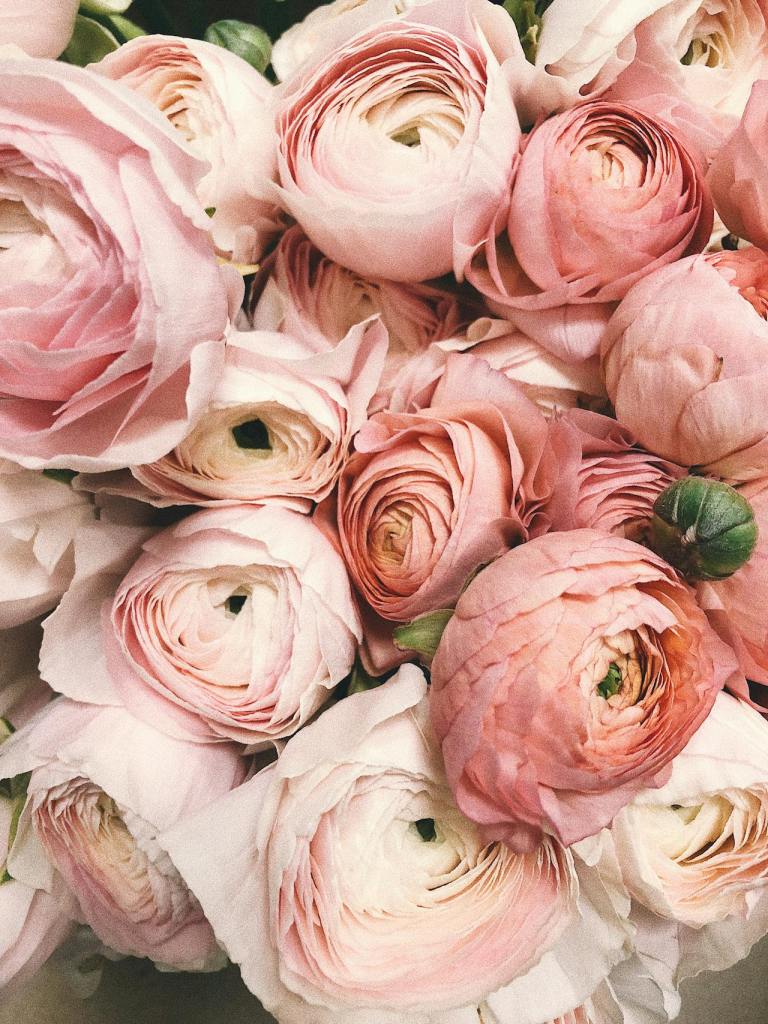
You stand outside the coffee shop, heart in your throat. That is before you see your reflection in the window. That is before you see the six foot tall pair of wings the color of milk attached to your shoulder blades, glimmering and shimmering like stars.

You gasp.

“It’s never been about lust,” Micah whispers, “your seraphic metamorphosis. It’s been about love.”

end.

Isabelle Palerma


This short story is entirely my own content – no A.I. used to create this.