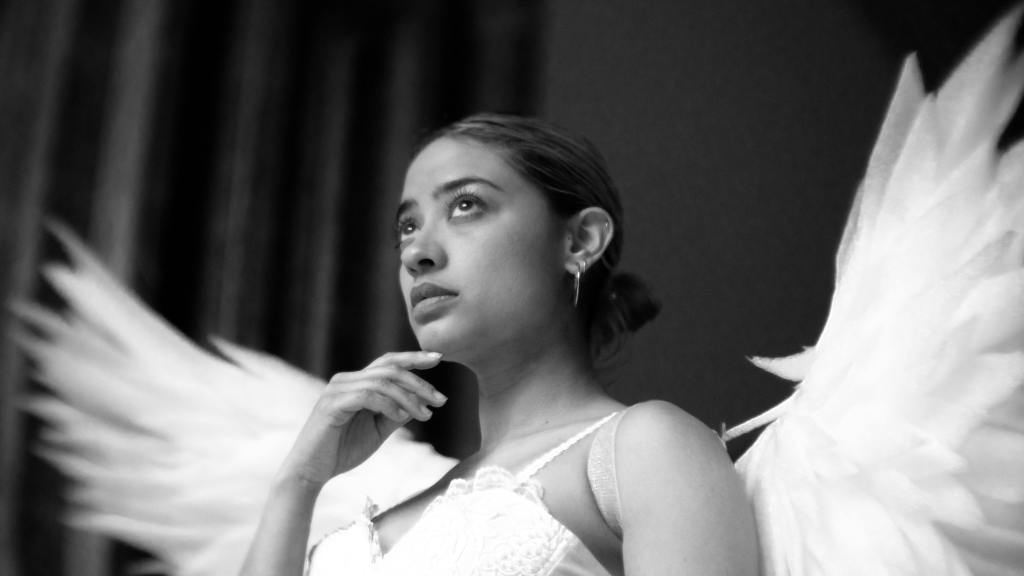
Bringing the Children to the Water: a Short Fiction

Children are the most difficult passengers. Often, they fidget or they ask a thousand questions — most of which I cannot answer. A disturbing number can’t keep their eyes open, falling into a deep sleep of which I feel uncomfortable waking them from.

We’ll be in the boat, or gondola, or ferry, whatever you wish to call it, and I’ll be guiding it to shore. Then, typically, they will ask the usual child-like questions, “Where are we going?”, “Are we there yet?”, “Am I going to see my mommy and my daddy when we get there?”

I don’t know how to elegantly express I’m simply a means of transportation.

Most adults are quiet, peering over the edge, into the water. A few ask a couple questions.

But children are so different.

This one, I want to protect. From what, I don’t know exactly, but as I drag my oar through the river, he hums to himself quietly. He is small — so small — and yet his eyes are large and round. Curious. Yet he does not ask questions.

He tries to pull himself higher and each time, tumbles backward. If I could peel myself away from my responsibilities, I’d help. But I also hate how strongly I feel for this child.

I try not to get emotionally attached to passengers.

They’re not simply passengers. They’re so much more.

But I try to label them as such.

We all have our rules to keep everything in tact. Most of all, our sanity.

But this boy, humming, in my little dinghy, snuggling in the curve of the bow of my small little boat. My gondola. My ferry barely accommodating us. This boy? He holds my heart.

And I hate that he does.

He’s young. Maybe eight. And children are notoriously the most difficult passengers. Yet when he first gets on my ferry, he tries to introduce himself to me and I interrupt him, as nicely as I can, asking him not give me his name.

It makes it hard to stay professional.

At the end of our ride together, as I’m about to hoist him to shore, he says, “It was nice riding down the river with you. Can I tell you my name now?”

I offer him a sad smile, lifting him to the land. “I’d prefer you didn’t.”

He nods. “It’s just a job, huh, mister?”

“Ain’t that.”

He shoots me a quizzical glance. I don’t want to explain. Don’t get attached.

“Oh,” he exclaims. His big, blue eyes meet mine, appearing even wider. “Is your name Karen?”

I bite my tongue.

“That’s weird, no offense,” he continues, “that’s a girl’s name. Anyway… I found a gold coin. Don’t be grossed out, but I found it in my mouth. I want you to have it.”

He hands it to me. It’s not real gold — just foil. The foil isn’t soggy or peeling — just soft. So, I pocket it, and as I place it in my pocket, I watch him walk closer to the shore.

“Hey, kid,” I call.

He turns.

“My name isn’t Karen,” I tell him.

He stares at me, open-mouthed, as I peel apart the gold coin and pop the chocolate into my mouth. “It’s Charon, and we just crossed the River Styx. This candy was your entrance admittance into the afterlife.”

He continues staring, but as I bring my oar down into the river’s water to turn to get my next passenger, I hear the quiet plink, plink, plink of the boy tossing more chocolate gold coins into the water.

And all I know is I have never wanted to save a soul as badly as I’ve wanted to save his.

Isabelle Palerma

A prompt from Jerald Wegehenkel: “chocolate coins for the ferryman”.

An Excerpt from a Second Work-in-Progress

Another scene from a different work-in-progress. I’d love to know your opinions!


From miles away, incandescent light glowed from the City of Glass. Beautiful, glittering light sparkled in the inky blue-black twilight. A horse detached itself from a carousel and galloped into the dark, leaving a scintillating gilded trail shimmering behind him. The horse was as black as midnight with golden constellations on his back, desperate to leave his post.

No one was around to see except the young girl who hid behind a twisty and gnarled tree. She did not speak but watched as the bars that had speared the horse separated. The horse had wriggled through and the girl continued to stare at the gold glittering in his wake. She thought she should warn someone in the city, but even here, even now, she had no voice.

It felt like the horse was seeking freedom, and the girl understood the need for freedom, too. But her voice was empty. She had no words.

Under the hollow of the moon, she opened her mouth and screamed. The scream was the only voice she had. And the scream separated the City of Glass and the carousel horse from where she lay, thrashing in a bed.

The shrieking awoke her younger sister who was only a few feet away. She ran to her, bridging the distance. “Evelyn,” the silent girl’s sister cried out, shaking her. She continued to throttle her sister to wake the girl, to stop the screaming.

Tears flowed down both sisters’ cheeks but for vastly different reasons. When Evelyn awoke, her hazel eyes were unfocused. The horse, the horse, she thought, but the words would never come out.

Ella knew better than to expect Evelyn to speak. Everyone did. Yet Ella stared, expectant, hopeful.

But then, as she watched, Evelyn’s demeanor changed. She began to gasp, to clutch at the thin air, clenching and unclenching her fingers. Evelyn’s face paled, the color of paper in the dim moonlight. She lunged forward, grasping at nothing.

Ella gnawed on her lip, helpless. Frightened.

Then, as though all the life-wind had been sucked out of her, Evelyn collapsed backwards on the thin mattress, shuddering. Her frail chest rose and fell. Ella couldn’t help but think how fragile her sister looked. How weak her bones.

At Wyndhurst Academy, the other children often kept to themselves, and that autumn night as the wind whipped against the shutters and the rain pelted the roof, as the girl tossed and turned, they slept. Or at least pretended to.

Ella, Evelyn’s sister, crouched beside her sister’s bed and stroked her hair, coaxing her back to sleep with a quiet lullaby. As Evelyn started to lightly breathe again, Ella pried her sister’s hand open. The fist she had formed held something. Not empty as Ella suspected.

The fingers parted contained a ceramic horse as black as midnight with golden constellations on his back. Its painting was slightly faded, yet Ella was transfixed.

Where had the carousel horse come from, she wondered, and why was Evelyn clutching it like it was a dead man’s treasure?

Isabelle Palerma

This excerpt is entirely my own content – no A.I. used to create this.

Rain Falls Fast: a Short Fiction

For National Short Story Month (like last year), I’m experimenting with writing more short stories.

The prompt from Dylan Drakes’ randomizer is an affectionate yet reckless street performer having to prove her innocence in a dark fantasy/sci-fi mind transfer short story.

Features: dark, potentially triggering imagery.


The way the rain came down wasn’t good for business. Nobody has got time for buskers when it’s pouring down rain. They’re busy shielding themselves from the tears from the sky, and it’s so damn loud. I wish I could just blame the noise on the howl of the wind, the tip-tap of rain on awnings, but it’s all those thoughts.

People’s thoughts get louder – and sadder – on rainy days. Folks wanting to jump from bridges. Take too many pills. It’s enough to break your heart. I’d switch places with them if they’d let me. Bury me six feet under instead.

I never cared about something as petty as my life. But the rain falls fast. Their thoughts loud. And I want to mother them. Protect them from the darkness in their minds.

So, one by one, I guided them out of the rain, out of the city, to a tent. The circus. Where there are clowns and a ringmaster and fire breathers and elephants. Tigers doing tricks. Fortune tellers with crystal balls.

One called me “selfish” as I led the people with the loud thoughts to the circus. “Self-centered” like an accusation. And it stung me like a wasp sting.

“You’re not as sweet as you seem,” a performer hissed.

An eyebrow arched, I had a million questions. I must have allowed him into my mind and vice versa because the words continued there.

Prove this is altruistic, he demanded, prove you’re not doing this just to quiet the streets. To silence your mind.

I wanted a little peace, it was true. Their thoughts interrupted my ability to play my violin. But I genuinely cared. I wanted what was best. Tell me you are innocent. That this is for the people and not for you, Clare.

His wheedling stuck with me. He wasn’t wrong. I was selfish. I always have been. Taking them to the circus wasn’t just charity. It was to quiet my mind. To still the streets. To leave behind the voices.

And yet, one persistent, reckless voice remained, telling me the streets would be so much quieter without a busker, a violinist, named Clare.

I never cared about something as petty as my life. But the rain falls fast. My thoughts loud.

Isabelle Palerma

This short story is entirely my own content – no A.I. used to create this.

Dream

As you may or may not know, one novel I am currently revising is about a young woman whose dreams begin to interfere with reality, and another WIP (work-in-progress) is about a dystopian future where sleep is outlawed.

Here’s a dream I had a while ago. At the time, I thought it was more like a vision than a dream, and I had a professional dream interpreter interpret it for me. I thought some of you might be interested in reading the interpretation.


Life was a whirlwind: people deserting me, families I used to work with shaming me, friends leaving and spreading false rumors, etc. My family was angry with me because I owed them money.

Interpretation: This represents my anxiety, what I am feeling presently.

Everywhere I turned, people were mad. This part was semi-lucid because I kept thinking, “I’m in bed. I’m going to remember this and write it down. I’m going to learn from this. I’m in bed. I can feel the night breeze.”

I ran up the stairs through a class in a lecture hall.

Interpretation: The upward path I was on represents success.

At the top of the staircase, there was a figure I could not see. He apologized for putting me through trials. I told him that I nearly died. I told him that people rejected me and hurt me in many ways.

I told him that he was responsible for things being messed up.

Interpretation: This figure represents a scapegoat, a person who takes the blame for the uncertainty I have in letting others down.

The lecture hall represents the feeling of being “lectured” about morality.

Furthermore, my explanation to this figure about nearly dying and people rejecting me represents that I cannot handle the rejection he is placing on me.

This figure represents a lesson I must learn.

The figure smiled, emanating a powerful, white glow. It was so luminous that I could not see beyond him. I ran through the light and entered a cafeteria.

A girl I knew when I was younger stood in the doorway. She was a friend who later became an adversary. I told her what I told the unseen figure, “I withstood all my trials and found that I am my own hero. I did it all on my own, and I’m still standing. I discovered I can do it on my own.”

Interpretation: The cafeteria represents a place of nourishment and nurturing. I am trying to please this person who stands in the doorway, Judgment. She does not represent Good nor Bad. She is my Experiences. Because of her, I have taught myself to be cautious.

She tells me though I can do it on my own, I don’t have to, then hands me a stone.

She tells me I must polish the stone. She did not give me any further instructions on how to polish the stone, simply that I must polish it.

Interpretation: Her lesson is twofold. She is both advising me and giving me permission to reach out to others. Though she has failed me in the past, others will not necessarily follow suit.

The stone represents Truth. How does one polish a stone? By tumbling it and removing the dirt.

What remains is Truth.

She told me that I will know when my task is done. She told me, “You will know your destiny after you polish the stone.” She also told me, “You saved him from his own noose.”

I held the rock as she faded from sight. As she faded, I heard her say, “Put it under your tongue.”

Interpretation: I saved him by telling him he needed to heal himself. Holding the rock represents me holding my truth. She is telling me to keep my truth a secret.

I saw a beautiful man like no one I had ever seen before. He emanated a radiance, and I felt my heart swell.

“Not this one,” a voice said.

I kept walking and arrived at a staircase that sloped and curved beyond my line of vision.

I walked down the stairs to arrive at a landing. From the landing I could see, the stairs led to a hallway with a door.

I began to choke on the rock under my tongue. I nearly swallowed the stone (the Truth) that I held in my mouth.

Interpretation: The voice is that of Judgment. She has returned to warn me that the first man was not the right man. The sloping staircase represents an unclear path. It could lead to a great success or a terrible downfall. The hall leading to a door represents the unknown as well. The door could be an escape out or a prison within. I do not enter the doorway, so, whether it is an escape or a prison is unknown.

As the stone tumbled around my mouth, a man with dove-white skin, dimples, and an amazing jawline ran up the stairs to meet me. He watched me gag on the stone, wanting to assist me but unable to help.

I finally coughed and choked up the stone (the Truth). It had tumbled into a glimmering tiger’s eye. The man too transformed but became harder to see. He was still beautiful, just harder to see.

Interpretation: I walked down to meet him, yet he walked up to meet me, but we still met in the middle. By walking down to meet him, this represents I must lose something to meet him.

He held in his hands a noose, and around his neck, he wore a placard that said his name.

The voice said, “He is the one.”

Interpretation: He has removed the noose (a leash), and by doing so, the man is finally free. Judgment has again presented itself to say he is the one, but something has changed. He is free, and of his free accord, he ran up the stairs to meet me and underwent his own transformation.

The dream is saying I must hold my truth until it is polished and clean. When the time is right, I must choose between speaking it-freeing it from my mouth-or swallowing it.

Isabelle Palerma

The Golden Compass: a Short Fiction

For National Short Story Month, I’m experimenting with writing more short stories.

Now, I’ve recently discovered that the United States’ current administration is slashing funding for the National Endowment for the Arts and continuing to ban more books by BIPOC authors as well as LGBTQIA+ authors.

As a result, I thought it’d be important to write short stories, based on titles alone, prompted by books that have been banned. I’m choosing to write based on fiction I haven’t read so as not to encourage the story I write.

This one is called “The Golden Compass” by Philip Pullman.


The Golden Compass

‘Whenever you are lost,” Papa whispered to me, his voice near vanishing in the noise that has surrounded us, “you can find me using this.”

“Using what?” I asked in reply, but before he could answer, I felt the heaviness in my pocket as he had slipped something into it.

I almost spoke, but he hushed me. I almost took out what he had suggested to find him with, reaching into my pocket, but he stopped me. “Not yet,” he said, his tone stern.

And with that, it was as though the northern winds had uprooted him and pulled him from my very side. The chatter, too, that had surrounded us faded to a faint murmur.

I pulled the gift – if you could call it that – from my pocket. A golden compass.

Papa appeared. “Lana, I haven’t even been gone three days yet, and you’re already summoning me?” he scolded me.

How had three days already passed?

As though reading my mind, Papa explained, “Time moves differently when we lose someone. When they die, grief alters the way time flows. Sometimes, days blur together into weeks. Other times, hours crawl agonizingly slow. It can all rush together because there’s no one around to remind you.”

It was weird, but that hit deeper than I expected. Grief had punched a hole in my chest, and I didn’t even know that I had lost him completely. I figured he was just another state away, maybe on another trip.

But dead? Gone? I didn’t know how to process this. And all the noise was back too.

“Were you feeling lost, Lana?” Papa asked, his voice feeble yet familiar. It was as though he were speaking directly into my ear.

“I am now,” I admitted, tears streaming down my face. “I didn’t know you died.”

“Oh, my sweet, death only kills my body. My spirit is in this compass, and that’s the good part. Don’t lose this compass, and you’ll always have me.”

I nodded but still felt disoriented, even though the compass pointed in the direction of home.

Isabelle Palerma

According to several sources, including Reactor magazine, The Golden Compass was banned in several places because of its promotion of atheism and attacks against Christianity.

This short story is entirely my own content – no A.I. used to create this.