Poet Spotlight on: Sakshi Narula

Sakshi Narula is a poet, author and an artist from India who lives in Muscat, Oman. She is the author of four poetry collections and also a spoken word artist. Her words center around love, loss, healing, grief and femininity. Some of her poems have been featured in the Survival Anthology by Magesoul Publishing, From One Line Anthology, Book One by Kobayaashi Studios and in Yellow by Yellow Penguin NYC.

I have been reading Sakshi’s poetry for a couple of years now, and she is incredibly gifted. Her poetry is the kind you can find yourself immersed in for hours and not even notice the passing of time. It surpasses the standard of contemporary poetry and should be recognized for its unique and profound style.


Sakshi, your poetry book is unlike any I’ve seen before, and your poems are so refreshingly different from a lot of what we see on social media. Where do you get your inspiration? Have you ever been compared to any other poets? If so, who? If not, who are some of your favorite poets and why?

I have been through a lot of ups and downs like any other person. My writing is a reflection of the things that happened in my life in some form or another. Music and books have always been my steady companions and have inspired a lot of my work too. Yes, I have been compared to a lot of poets in certain reviews purely because I write love poetry and poetry that centers around loss and heartbreak. It would be really boastful of me to state their names so I am going to refrain from doing that, but it has been rather overwhelming and flattering. To answer your last question, my favorite poets are Ada Limon, Andrea Gibson, Sharon Olds, Pablo Neruda, Wendy Cope, Leonard Cohen, to name a few.

When did you begin writing poetry and what was the process like?

I started writing poetry seriously around five years ago. I used to be a blogger and used to ghost write articles before that. It was really surprising to me how organic the process of poetry writing was for me. It was like being in a second skin, like I was meant to do this. I always say poetry found me and helped me heal when I needed it the most. It almost always would start with a line and I would spend hours building and rebuilding a poem obsessively. There are days I would be surprised at how I even ended up writing something that I actually liked reading. In that sense, it has helped me realise that this is a gift, that it has the power to comfort another and I need to use that gift in the best possible way. 

How important is revising to you and your writing? Which pieces end up needing the most revisions? Why?

It is extremely important. I think to add layers to your poems, you need to be meticulous with editing and revising. That is what separates a good poet from a great poet. For me, it is going through every line and every word to make sure it is essential to the poem as a whole. Most pieces that are long form and usually poems that I use for spoken word require the most revisions. There needs to be a flow, a rhythm, the ebbs and the flows, the crescendo in the end, a punch in the gut, a feeling that remains with the reader, that takes the most effort.

What subjects are absolutely off-limits to write about?

I don’t write about mental health. I did try, but it takes a lot out of me to write about my struggle with depression and anxiety. I don’t write about certain aspects of my life because it brings a lot of things to surface.

What is your favorite poem? (Of another poet’s? Of your own?)

My favorite poem by me is 41 , A Love Poem To Me. Of another poet… True Love by Sharon Olds, Maybe I Need You by Andrea Gibson

You ask fascinating questions on social media – ones that challenge your readers and fellow authors/poets to think outside of the box. How important do you think it is to think outside of the box as a poet? Do you ever use your fans’ answers as a jumping off point for a poem? If so, what question was it that inspired the poem?

Never really used any answers from Twitter for a poem, but they definitely make for great conversations. It has been fun interacting with writers  and readers from all walks of life and countries. It’s beautiful how art and writing  connects us all on a very basic human level. More than thinking outside the box, I feel a poet needs to own their voice. Writing to fit a mould on social media or to be able to sell more books can rob one of their authenticity. 

Do you have any writing rituals? What are they?

Not really. I haven’t been writing much after I wrote House Of Stars And Flowers On Mars. Maybe it is just a phase. I write when the words find me. I do keep making notes during day if a beautiful line or idea for a poem comes up in my head. When I am writing I do keep going through those ideas.

I know some poets require complete silence when they write, others want ambient noise, and there are some who write to music. What kinds of sounds do you find it easiest to write to? Or none at all?

I enjoy writing with music in the background. I just can’t write with people talking continuously around me. I have my own writing playlists and I play them and write. 

What is something you’re afraid of?

I am afraid of losing the people I love and I think that is pretty universal. As a writer I am afraid of not ever having one shining moment with my poetry. But that is what keeps me working on my craft. I just think the only way I won’t accomplish anything is by giving up and I am pretty strong-willed not to give poetry or my ambitions up. 

Why do you write poetry?

I started writing because I was in pain and poetry was my safe place, a way to turn that pain into art, a creative release. Now I write because I want to be understood, to be heard and I want to make sense of this world we live in. I always believe there is a poet for everyone, there is a poem in the world that can understand and comfort you, no matter what you may be going through. Poetry is for everyone. So I write because someone may find their comfort in my words and feel seen and not feel stupid for feeling something. Even if there is one person who doesn’t feel alone after reading a poem of mine or my book, then I think it’s important for me to continue writing. 

Where can readers find you?

http://twitter.com/mssakshinarula

https://www.instagram.com/mssakshinarula/

https://sakshinarula.com/


41: A LOVE POEM TO ME…

41, I tear open a song like it’s a gift,
a birthday present from Lana, Morrison or Lennon
I dig their hearts out
from the graves in their words,
soothe the scars, 41 scars on mine
and sing it out loud, with a mouthful of wine
Blink once and I was 10 and blink twice and I’m 41
41, I think, maybe ten years or 14 more to go,
I bought a boxful of watercolors
and I haven’t learned how to make
watercolor paintings yet.
I have a book about kitchen gardening
and don’t know what needs to be planted yet.
Blessed kitchen garden.
Blessed kitchen, blessed garden, blessed home.
Yes, I have been blessed with love,
knock the wind out of me love,
my body hurts, soaked to the bone love.
Blessed with a lover,
the man of my dreams and angel baby souls,
2 playing in the backyard
and 2 in heaven at the end of the rainbow.
They grow, they smile, they laugh, they glow
and they keep me alive,
away from the darkness and never let me go.
But my nightmares are made of the mountain of dishes
in the kitchen’s unholy sink,
no friends to cherish, no friends to ring.
I turn a blind eye like they don’t exist
and think about strawberries and tomatillos,
and rosemary and habaneros,
the bath salts and the collagen I need,
about the dark chocolate cake,
the beautiful shoulder of lamb in the fridge,
and the crimson sunset today at 41 at my feet.
Yes, I have nowhere to go, nowhere to be
I mute everything, the phone, the world, the
unkempt hair and organic white sheets.
For I will not be as young as I am today,
as pretty as I am today,
as unashamed and unapologetic than I have ever been.
I built a home of poems and a kiln of all the stars in
my heart,
a home in the middle of wheat fields
41 bricks on the fireplace for 41 poets
who kept me warm on the nights I weeped.
What would Bukowski say about my poems I wonder?
Am I a comfortable poet or someone from the street?
I write my story like it’s everyone’s story,
and everyone’s in it, sonder!
41, Sonder is my favorite word from The Dictionary of
Obscure Sorrows, from any dictionary ever.
41, I reflect on the triumphs of all my yesterdays and
the ones to happen tomorrow.
Let me be your woman on love’s landscape,
the slow burn of a song on a cold night,
the blurring bokeh of city lights.
Let me fix your ribs like I fixed mine,
life broke us all differently but broke it did
And so, I poet at 41,
I send you a verse dipped in the smell of rain on a hot
summer day,
dipped in love from my brave undying heart,
and light from a thousand burning dreams in my eyes.
41, smug, the coffee and I are so hot I laugh
I resist, I fight,
I switch on the table lamp and write.

-Sakshi Narula

Isabelle Palerma

Poet Spotlight on: Jimmy Broccoli

Jimmy Broccoli is a Library Branch Manager by day and a published poet by night with a mission to inspire his readers through imaginative poetic storytelling. His work has been featured in several publications and he released his first full-length book, “Damaged”, on Christmas Day 2021 and compiled the poetry anthology, “Spotlight”, released in March 2022. He enjoys walks on the beach and playing with puppies.

His poetry is raw and tells a story. When you read Broccoli’s poetry, you can feel the emotion of each poem as though you had written it yourself. His poems cut through you like the serrated edge of a knife and don’t hold anything back.


What does poetry mean to you?

I’m a narrative poet, so poetry – for me – is a way to tell stories. Sometimes I write autobiographical poems, sometimes I write fictional accounts – and, often, I write pieces that dwell somewhere in the middle of the two. Much of my writing deals with grief, raw emotions, loss, and death – so poetry, for me, is often a car crash – stories bleeding onto paper or across a computer screen, staining the carpet below. Poetry allows me to express what I would normally keep quiet or secret – it allows me to breathe life into the otherwise unanimated.

When did you begin writing poetry and what has your writing journey been like?


I began writing poetry at age 12 – but didn’t find my “poetic voice” until my early 20s. As an English major at University, I took an upper-level Modern Poetry class and fell in love with confessional poetry – Sylvia Plath, Anne Sexton, Stevie Smith, Edna St. Vincent Millay, and others. My poetic style continues to be heavily influenced by the confessional poets of the mid-1900s.

Whose poetry would you say influences you most? In what ways has it influenced you?  

In addition to the modern confessional poets, my poetry is heavily influenced by music – mostly alternative. The lyrics of Nine Inch Nails, Keaton Henson, Morrissey, and Sigur Ros have been more influential upon my writing than the work of other poets. All of these musical artists write highly emotional, powerful, and raw lyrics – exposing the often strange, dangerous, rebellious, extreme, and dark sides of life. It is within this world I usually write. I keep a flashlight handy.

What is your favorite thing about writing poetry?

Poetry, for me, is the escape hatch behind the bedroom closet that opens into a world similar to ours – but more magical and poetic. Writing as Jimmy, I get the opportunity to be someone else for short periods, while still clinging on to my regular identity and life. It’s often thrilling – and a lot of fun.

What is your least favorite thing about writing poetry?

As a side effect of writing raw, emotional verse, the process of writing a poem can take me out of living for several hours or an entire day. When I write very personal poems, usually filled with painful emotions, I become mentally crippled – it’s much like having a temporary mental meltdown – but knowing it will soon be okay. I go through this until my mind tells me, “Hey, it’s time to function again”. Then, I get up and continue with my day.

Tell me about it. It’s an exhausting process writing an emotionally charged poem. What’s your process like?

I never block off or schedule time to write – ideas come to me and – if I like the ideas – I find the nearest pen and paper or computer and begin writing. For me, editing is a constant phase of the writing process – I edit while writing the initial draft and will revisit the piece to edit for the next day or two. I read every line dozens of times – and every time I make a change, I begin reading the poem from the beginning. On average, the initial draft of a poem takes me 2 – 4 hours to write – while the extra editing time can be fairly short (30 minutes) or take a few hours to complete.

As mentioned above, the writing process – for me – can be a painful one – but it is also therapeutic. Writing is a way for me to shed my demons and get out the emotions that have built up over the years. Writing is a release for me.

Who would you have over for lunch of your literary heroes/heroines and what would you serve? What food and which drinks? Why? What would you talk about over the meal?

Well – if musicians who write beautiful lyrics can be considered, I’d invite singer Jón Þór Birgisson (Jonsi), from Sigur Ros, over for lunch. No other writer, from my experience, reaches the epic emotional states Jonsi brings to music and verse.

Both Jonsi and I are vegan – Jonsi is a raw food vegan – so I’d prepare a large vegan platter that included fruits, vegetables, and nuts or bring a Raw Food Pistachio Zucchini Lasagna. A picnic in the park would be nice. I’d bring a sauvignon blanc (white wine) for me and bring whatever he prefers for him. I’m certain we’d talk about him throughout the meal. He’s a fascinating guy and I know I’d learn volumes from him. He is a hero of mine and spending any time with him would be a high honor.

How has poetry changed you?

Poetry has made me more community-minded. I love being a part of the worldwide poetry community and am a member of a good number of poetry groups online. These relationships – often leading to friendships – inspire my writing and are very enjoyable.

Where can readers find you?

https://amzn.to/3x6o0IP

http://www.jimmybroccoli.com


Broken God

His unshaven posture weakens
He wilts into my arms as if we’re dancing
A delicate dandelion stem exposed to hurricanes
A falling toaster into bathwater
With bubbles

He is crumpled paper and smeared ink
Downturned blue eyes
With confidence hung from rope
Swinging from unstable rafters
Looking down upon a chair with faded and expired paint

I build a fort

Marmalade bed sheets surround his symphony
In stillness, I pronounce him king
Fluffy life rafts in pillowcases
Mix-matched blankets and couch cushions
He sits in silence, thinking only in whispers

With evaporated tears, he falls asleep, handsome
I hold my breath, then exhale diamonds
My emotions spill upon the floor
As I listen to him breathing
-Jimmy Broccoli

Isabelle Palerma

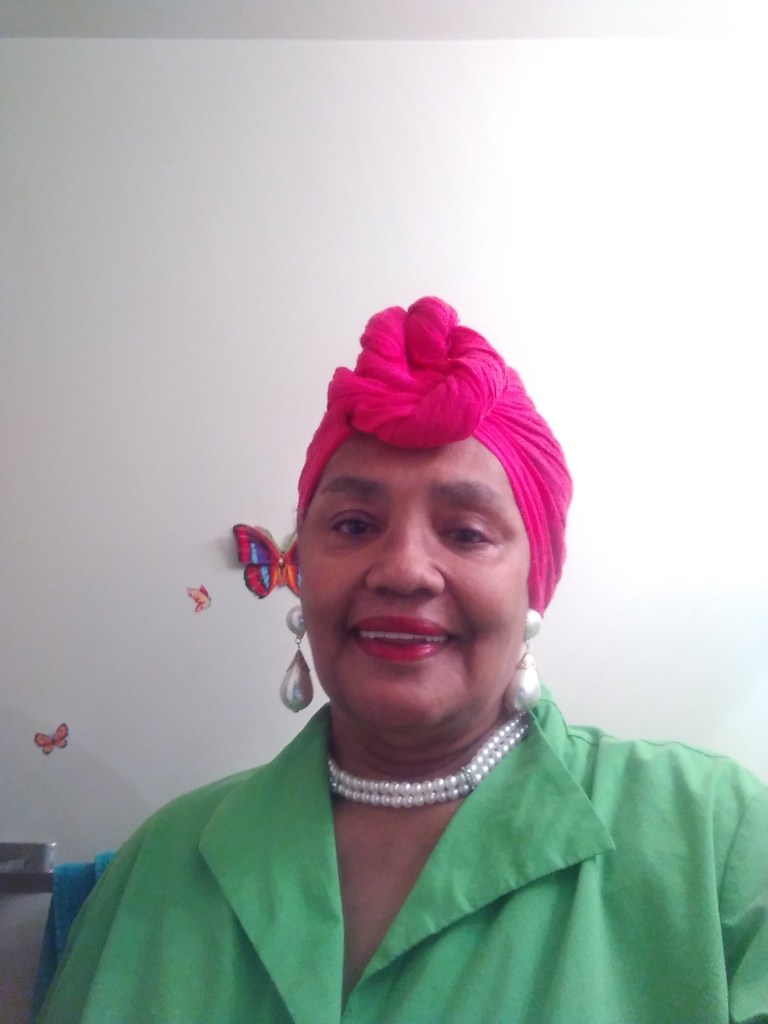
Poet Spotlight on: Carlene Gist

The last poet in my poetry spotlight is Carlene Gist or “T.C.” Not to make Carlene self-conscious, but she is the oldest poet I interviewed in this series and has a broad range of experience. Named after her father, Carlene is the first born of seven children and was born and raised in Detroit, Michigan.

In her own words, this poet says, “Poetry is a genre of writing that I’ve always admired. While in the first grade, I committed to memory and recited “The Night Before Christmas”, for the Christmas play. I’ve been writing but mostly reading poetry since then. Acting, singing and dancing are a few of my favorite things. I went from beating on tabletops to beating on the djembe, which is something I do to center myself. I hope one day to be a published poet.”


You have witnessed several historical events throughout your years as both a person and a poet. Do you find that current events shape your writing, and if so, how? What kind of events propel you to write poetry?

Being born in the late ’40s, I’ve seen a lot. Current events most definitely influence my sentiments when expressing myself through the written word. Poetry, to me, is one way of expressing one’s feelings and perspectives. I can find poetry in almost anything if I but just be still and observe. I find myself stirred by events that display man’s inhumanity to man on any level.

How has your writing changed over the years?

I used to write only poems that rhymed and a lot of love poems. I now write in free verse and about a variety of subjects. I also like writing haiku.

What influence does being a spoken-word poet play on the way you craft your poems?

I know that poetry, as all forms of art, is subjective. I do give effort in trying to find the most effective words and weave them in a manner that might help the audience receive the sentiment I am aiming to convey.

What poet, living or dead, would you like to meet and have dinner with? What would you serve your special guest?

Edgar A. Poe; Kahlil Gibran; Henry W. Longfellow; Paul L. Dunbar; Langston Hughes; Maya Angelou, to name a few. I would have said my peer, Nikki Giovanni. After hearing Amanda Gorman recite her poem “The Hill We Climb”, I would love to sit, chat, and break bread with her. I’m interested in what the younger generation has to say. I believe pizza might work.

What are your favorite aspects of your own poetry?

I like the way I’ve been able to provoke one to think about what I’m trying to convey.

When do you usually write your poetry?

Usually at the midnight hours-between midnight and three a.m.

What do you do when you experience writer’s block?

It’s really tough for me to start a flow when I’m experiencing writer’s block. Prompts, music, or just write what flows through me and edit later.

It

Written before the new time of 9 min. and 29 sec.

“It” looks into the camera. I watch
Knee on neck, hands tucked comfortably in pockets
Some might say cavalier, I say eviler
A cold and icy stare.
My eyes feel frostbitten, they hurt. I sense danger.
Like an ostrich who buries their eggs in the sand
Like an ostrich who senses danger and can’t run.
I bury my head in my hands. I feel not better but safer
Can I fear what I can’t see?
Under the covers a child will hide for fear of the boogeyman
Two minutes pass,  spread my fingers and peek.
My heart races,  as pressure rises. “It” is still there,  knee on neck
hands comfortably in pockets.  Under my covers I retreat.
Bury my head in my hands a little longer this time.
Hoping this time “it” will surely be gone.  Three more minutes pass
and “it’s” not gone yet.  Still there, icy stare, knee on neck,  hands tucked comfortably in pockets.  Hugging my pillow tight, I start sweating and crying.
A fearful child becomes so scared it will call for their mother.
They trust and believe Mother,  the person who witnessed them take their first breath is able,  and will save them from taking their last if she can.
Sounds of voices unfamiliar to me, I decide to  peek and see.
I’m petrified I can’t breath, “it” won’t leave.  Why must “it” torture me so long?
Three minutes seems like three hours I’ve waited for “it” to cease.
Eight minutes now, seems like eight days of holding my breath , suffocating under my covers.
They say fear leads to hate and hate to destruction
Forty-six seconds later  “it” is still there but George Floyd is not.
Mother came to get him.
I slowly lift my head out of my hands and start to breathe again.
-Carlene Gist

Isabelle Palerma

Poet Spotlight on: LowKey

In her own words, the poet LowKey says this: “I go by the name LowKey. I write about anything and everything that stirs me enough to want to pick up the pen. Blessed with an attention span of a goldfish, the brevity of my literary work comes as a given. Simple yet effective is my writing mantra.”

LowKey writes poetry that hearkens back to more traditional poets, yet has a distinct style all its own. Whether it is one of her short pieces or a longer work, she stops to make readers of her poetry think and contemplate the content of her works. They are a reflection of the world we live in, both our interior realms and the external.


When did you first discover that you were a poet? What was that experience like?

When I was around 18. It was more of a “okay, so I think I can write poems” than a “aha! me is a poet!” I remember being pretty nervous when I asked my mum to have a read. She is an amazing writer and poetry is her thing. I saw her eyes welling up as she was reading the piece. I think that was the first time I realized how my words could actually impact people. It was empowering, humbling, liberating, all at once.

What are some of your favorite subjects to write about? What inspires you to write poetry?

I think the darker shades of human emotions is what I like to explore and write about. We as a society present ourselves in a neatly wrapped package with a red bow around it. What goes on underneath that shimmery wrap is something we usually shy away from or deny. So that is what I love to discover through the words I pen. I think pain inspires me to write the most. I know that might sound a bit whack, but some of the best creative pieces I have written have been from when I was in a dark place. Maybe it is because my need to lean on creativity to express myself is the most during those times.

If you could spend the afternoon with another famous author or poet, who would you choose and why?

Has to be Sir Walter de la Mare, although he isn’t amidst us anymore. He is my absolute favorite. The way he built an entire atmosphere around the reader with his words is beyond amazing. From his poems, he seems to have been pretty intense and quiet. It would be fascinating to see what he really was like.

What is your favorite aspect of writing poetry? What is your least favorite?

I think the healing that comes from writing, regardless of the form of writing is my most favorite aspect. The least favorite aspect is someone out there always does it better and you go, “Damn! why didn’t I think of that!!?”

How did you discover your style of poetry? How did you find your voice as a poet?

I feel like every writer has something unique to offer that might be lost if one tries to emulate. I think “inspired” would be the right word for me here. I like subtlety. I always have. So when I began writing, it was something that came naturally to me.

What advice do you have for poets who are just beginning their careers as poets?

Be honest and unfiltered. Creativity is where you can just let go. So, make the most of it. Most importantly, don’t be swayed by the negativity that your readers might hurl at you. As long as you keep your “writer conscience” clear, it’s all good.

Do you think shorter poetry is easier for readers to digest? What influence has social media had on your writing style, if any?

Oh yes! I am not sure about the digest part, but people nowadays definitely prefer brevity. Social media fortunately has not affected the way I choose to express myself through my writing. The reason I said fortunately is because it is so easy to be engulfed and affected by social media in this day and age. From creating pressure to making you doubt yourself to making you lose your originality because you have fallen prey to trends, social media can take away the voice that it so freely provides as well.

Who are your favorite poets to read?

Beside Sir Walter de la Mare and your pieces, I really like reading Edgar Allan Poe and J. Andrew Schrecker.

Where can readers find more of your writing?

https://www.lowkeyrants.com/


Deception

Little Tommy, five years old
Sat with Grandpa and learnt to fold
Colored papers, ribbons, and casks
Into little party masks.

Birthday masks and ballroom faces
Held together with glue and laces
Funny, scary, bold and rude
Different masks for different mood.

“Why do people hide their skin
Behind a veil, so weak and thin?
Tell me, Grandpa, if you can,”
Tommy asked his grand old man.

Grandpa smiled, a smile of lime.
“People do it all the time,
Scared to come out in the bright
They keep their true self out of sight.”

“They coat all bitterness with sugar and honey-
They cover their sins with grey black money;
The colorful masks cover their lives,
But their real self reflects in their eyes.”

“No mask ever made can cover the mirrors
That show perfectness and all errors;
The greatest gift of God, no lies,
All truth surfaces in one’s eyes.”

“So, be true to your own self,
You’ll need no mask, you’ll need no help-
Let your face reflect the love
That He showers down from Heaven above.”

“Be honest, and love mankind-
These things these days are hard to find;
One by one, these steps will grace
And make the world a happier place.”

-LowKey

Isabelle Palerma

Poet Spotlight on: Brandan T.C. McCarty

Poet Brandan T.C. McCarty lives in Washington and in addition to writing poetry, he is interested in music and art. As a member of the Makah tribe, he has been a dancer, singer, and artist in that culture.


Brandan, you have said before music influences your writing. How exactly does music play a role on the poetry you create?

Yes, music is an influence. I listen to a large base of music because of family and friends introducing me to new music. It depends on the music sound being played, and it could just be a lyric(s). Metallica is a huge influence.

Writing is a form of art, but I know you also paint. What does the intersection of art and writing mean to you?

In ’01, I was hurt emotionally by a teacher in art college. I would destroy any art I created, so I switched to writing to deal with traumatic past events. In ’11, I started to work with acrylic paints. By ’18, I became a visual artist as well as a New Age Coastal Artist for my Native art. The past two and half years, I have been using many mediums and platforms to create art pieces. I still wrote, but not as much. I figured why not do both and maybe blend them together in some pieces. ‘The Wanderer’ is close to a visual concept of what I am evolving into as an artist.

Your Makah roots are very important to you, as is family and knowing your history. This is evident in the poetry you write. What would you advise the young poet who is not as well-versed in their past as you?

My roots are important. My dad has said to me all that I do reflects back on your teachers and persons involved with you. My mom said the same thing in her way of communicating to me. I read. I read just about anything. I was told to figure out the style you want to write, and then go find published work similar so your skill can be honest. As for past or culture, read and spend time with families and friends. Listen, take time to actually listen. Even if it is a day spent sitting in a kitchen drinking coffee and watching grandpa carve, or dad paint a mask. Open yourself to learn, to fall and get back up.

How would you describe your being a father as an influence on your poetry?

I used to have some selfish habits, and those habits almost claimed my life. I came to realize, I don’t want this for my eldest son. Nor any other child that looks up to me. So I turned from booze, I went back to arts. Poetry is art, to me just about anything could be considered an art. Now, with my baby I have been relearning to sing my Native Family songs and dancing the dances. I have been away too long from it. I guess I can say, being a father has enriched my poetry with more care and love than I had before.

Who are some of your favorite poets? What aspects of their poetry appeal to you as a reader? As a writer?

Charles Bukowski, as a reader, good comic. Biography spoken in poetry verse. As a writer, someone once said my work reminds him of Bukowski. Raymond Carver, as a reader, his work involving water or daily life. As a writer, I met Tess Gallagher and she said I reminded her of her late husband, Raymond. J. A. Janice has one book of poetry. Read a little a bit of it. A strong woman, and a gentle soul. She writes crime novels. Met her a couple times in person. My mom got me into her works. My late Mama Valerie, because she had a talent of words and wish I recorded some of her work better.

Where can readers find more of your writing?

https://www.postpoems.org/authors/majesticdravon 
https://allpoetry.com/Brandan_Tototch
www.facebook.com/nmpBrandanMc


Gift Exchange

I stand before you, shivering and straggling a
box.
A battered, scarred, worn box full of the
darkness I wish to gift you.
The air I taste and breathe, is excellences of
sweetness.
In my bitter hands, 1 hold my broken dreams
and scattered Spirit.
All the past lovers have left their mark,
tainting my heart and you stand before me
Accepting the box, receiving as a gift and
you set the broken box at our feet
You lift up my dampen chin, my flooded
beard and your lips swim in my waters
You brave the morose salt for a delicate
kiss.
In return, you gift me light. You gift me
soothing songs to dance my heart
I gift you my darkness, and you gift me the
warming light.

Brandan T.C. McCarty

Isabelle Palerma