Poet Spotlight on: Keighley Perkins

Keighley Perkins is a poet and academic based in Wales whose work explores love, longing and the quiet aftermath of intimacy. Her writing is image-led and emotionally attentive, often dwelling in the small, intimate moments that shape connection: what is said, unsaid and remembered long after.

From a young age, she has been drawn to words: how they work, what they mean and how they taste. This fascination continues to underpin both her creative and academic work where language is not only a tool but a subject in itself.

Her influences include Selima Hill, Richard Brautigan, e.e. Cummings, Anis Mojgani, Rupi Kaur, Dylan Thomas and Jeffrey McDaniel.

Her poetry has appeared Fire, Acumen, Obsessed with Pipework, and Erbacce. Alongside her poetry, she researches political discourse and online harms. More about her academic work can be found here: https://allmylinks.com/keighleyperkins.


What does it feel like when you write a poem? Walk me through that process.

Writing a poem feels like stepping into a heightened state: something between focus and disappearance. There’s a kind of excitement to it, a pull that’s difficult to resist – as if the poem has already begun and I’m just trying to catch up to it.

The world around me seems to shift in two directions at once. Everything else fades: the noise, the movement, the sense of time. At the same time, certain details come into sharp focus. A word, an image, a feeling will suddenly feel illuminated as though it has been waiting to be noticed.

It becomes a kind of slow state but one that feels almost physical. My attention narrows to the page, the pen, the movement of thought. Everything else falls away. There’s something addictive in that: something about being so completely absorbed that nothing else can interrupt it.

At its most intense, it feels like being electrically alive, like something is moving through me faster than I can articulate and my only task is to stay with it for as long as it lasts.

Do you have a word or an emotion you return to in your poetry? What do you think that says about you as a poet or as a person?

I find myself returning to longing, particularly unrequited love. There’s something about that space that feels both delicate and expansive: a quiet tension between joy and ache, presence and absence. It holds a kind of exquisite sadness but also a strange beauty I keep wanting to understand.

More broadly, I’m drawn to intimacy in all its forms. I’m interested in the emotional and psychological undercurrents of relationships: how people connect, misconnect and carry one another long after. That doesn’t always mean romantic love; friendships, too, offer their own depth, their own quiet complexities.

I also notice a pull towards the Gothic in the work. Certain images recur: the moon, ghosts, things that linger just out of reach. I think this connects back to that same fascination with longing. These figures are, in many ways, untouchable: present but not fully graspable. They allow me to explore what it means to want something that cannot quite be held.

Perhaps that says that, as both poet and person, I’m interested in what resists resolution: the spaces where feeling stretches, unsettles and remains.

Do you have a favorite time of day to write?

As much as I am a morning person, I tend to write at night. It’s the point in the day when everything else can be set down, when I can return to the thoughts that have been quietly building, almost unnoticed, beneath the surface.

There’s a sense, at night, of stepping outside of my other roles. I’m not an academic, not a partner – I’m simply myself. It’s a space where the roughness and rawness of my thoughts can emerge more freely without needing to be shaped too quickly.

I think there’s something inherently reflective about the night. It offers a kind of shelter, a stillness that allows for deeper exploration. The world softens, distractions fall away and what remains feels more honest, more immediate. It becomes a time where I can sit with what is hidden and begin to understand it.

Are your poems autobiographical or do they simply show facets of who you are on the page?

My poems often begin in something real: an emotion, a moment, a memory I’ve lived through. Drawing on personal experience allows me to explore those feelings with a kind of emotional honesty that feels difficult to access otherwise.

That said, what happens on the page isn’t a direct transcription of life. I tend to expand, reshape and, sometimes, exaggerate what I’ve felt, allowing the emotion to become more visible, more concentrated. The truth of the experience remains but it is heightened, given a sharper outline so it can be seen more clearly.


So, while my work isn’t strictly autobiographical, it is always rooted in something real. There is usually a trace of lived experience beneath it: a small, persistent thread of truth running through whatever the poem becomes.

Have you ever had to abandon a poem because it got to be “too much” to write? Without getting too personal, can you describe what happened?

When my first dog, Molly, passed away. It was one of the most painful experiences of my life. Writing became the only way I could begin to process that grief but it wasn’t something I could approach in a sustained or structured way. Instead, it came in fragments: isolated lines, half-thoughts, small pieces that felt all I was capable of carrying at the time.

There was something both relieving and unbearable about it. On the one hand, writing allowed me to give shape to what I was feeling, to place it somewhere outside of myself. On the other, each attempt felt like returning to the same wound, like pressing on something that had no intention of healing quickly.

I think that experience taught me that writing doesn’t always offer resolution. Sometimes, it simply creates a space to sit with what is difficult, even when that difficulty resists being fully expressed.

Are you the same person on the page as in real life – poet vs. human? If not, where are the similarities? What are the major differences?

I tend to think of the poet-me and the human-me as the same person, just held in different light. They’re not separate identities so much as different facets, ways of focusing attention, of deciding what to bring into view.

The poet-me is, perhaps, ore deliberate. More composed. There’s a level of shaping and refining that happens on the page, a kind of performance, in the sense that experience is distilled into something more precise, more contained.

In contrast, the human-me is much messier. She lives through things without always understanding them, without the benefit of distance or clarity. It often feels as though the human version gathers the experiences while the poet returns to them later, trying to make sense of what was felt but not fully understood at the time.

Writing, then, becomes a way of creating a stylised version of the self – not inauthentic, but considered. A space where emotion can be arranged, examined and held a little more steadily than it can be in life.


Underground

You have never known
how it is to want like this,

to have ghosts,
riding the underground of your thoughts,
herding your longing home.

-Keighley Perkins

Isabelle Palerma

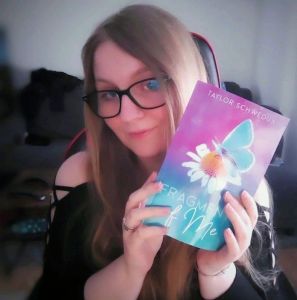
Poet Spotlight on: Taylor Schwedux

Taylor Schwedux is an Australian self-taught artist and poet residing in Germany with her husband. Her journey  into writing began at a young age, during primary school, where creative writing was one of her favorite activities—even in her free time. Over the years, she transitioned from many creative writing mediums, through songwriting to poetry.


Do you have any rituals when you write?

I do actually! When I sit down to write and want to focus, I refill my water bottle or make a tea on the side to drink, listen to lo-fi kind of music or music that helps to conjure ideas. There are some on YouTube I’ve come across where it sounds like you’re writing in a moving train or at a café. During these times, I also set timers. I may do a 30-45 minute session like this, or sometimes I could go over 2 hours just writing, turning off all the timers because I’ve been really in the zone with it, and my mind is burning with ideas.

Are there any particular poets who inspired you to write poetry?

Upon the first few poems I wrote when I was 13-19 and reworked for the book, I was heavily influenced by William Shakespeare’s sonnets. I had a lot of schoolwork surrounding Shakespeare and his plays. Also, not to mention – Sylvia Plath, Emily Dickinson, Oscar Wilde and Robert Frost.
What emotions are hardest for you to write about with great honesty?

As sad as this may sound, I find writing about happiness the hardest. Happiness to me is not always as universal as sadness or grief can be. When I’m sad, I find writing is the one thing I go to; when I am happy, I tend to live in that happy moment and not write about it was that made me happy.

Since a lot of your poetry seems to be autobiographical, does it ever worry you to share it with others?

Honestly, before publishing I had fears of being misunderstood for how different my life and upbringing is to a lot of people who never had that. It was the opposite for me, I felt a relief, as if weight was being lifted off my shoulders as I set my book out into the world. (Explain why I went ahead and published and why being misunderstood never stopped me).

I read a lot of poetry prior to it being published, especially more modern ones and seeing their works made me feel as though I can do this as well.

What does your first draft of a poem look like?

It definitely leans towards the messy type. I have poems written in my phone notes app, in a writing book, on my PC notes and even at times, scraps of paper If my phone isn’t near me. Thankfully, I keep my scraps of paper in a plastic sheet and go through it as soon as I can , rewriting what I wrote into my book.

When do you usually feel inspiration strike?

Inspiration can strike for me at any time, and sometimes being 3am, in the middle of being in a deep sleep needing to quickly write something on my phone notes. Sometimes when I’m out and about, something may catch my eye or I hear someone say something I will write it down and also a tiny description of what happened, what I heard or saw; to help with documentation of the inspiration.

If you could seal any one line from a poem in a message in a bottle, what would it be?

I think the poem “Dreams”  from Langston Hughes is what I’ll seal into a bottle.
“Hold fast to dreams
For if dreams die
Life is a broken-winged bird
That cannot fly…”


Fire With Fire

To fight fire with fire,
Or to extinguish the flame?
Oh, how I love to play this dangerous game— Me against the dancing blaze.
I feed my sorrow to the embers, Watch them crackle, twist, and grow, As the fire slowly learns what it needs to know.
To fight fire with fire
Or to extinguish the flame?
Perhaps it’s this question,
That’s bound me to this game.

-Taylor Schwedux

Isabelle Palerma

Restored Sight/Rediscovery: a Poem

A prompt from a.r. rogers:

“If I gave in to my free will today…”


It’s easy to think someone else
is the master of our circumstances –
a puppeteer
and we’re marionettes, strings tugged on.
But if I were in charge
of my own strings for a change,
perhaps I would cross a few things off
my list – not my to-do list,
but my bucket list.

Instead of going grocery shopping,
I’d go zip lining in the jungle.
Instead of writing poetry in my room,
I’d be performing it on a stage.
Instead of being a coward,
I’d be brave.
Instead of loving,
I’d make love in the rain.

I never wished to be hollow.
I never wished to be empty.
& yet, somewhere along the way,
I lost sight of free will, and I gave my keys
to a different master.
Somewhere along the way, I surrendered
myself and nobody found the heart
to tell me
I could be anything I want.
I just need to rediscover my free will.

This is the beginning of restored sight.
The start of a rediscovery.

I’m giving in to my free will today.

Isabelle Palerma

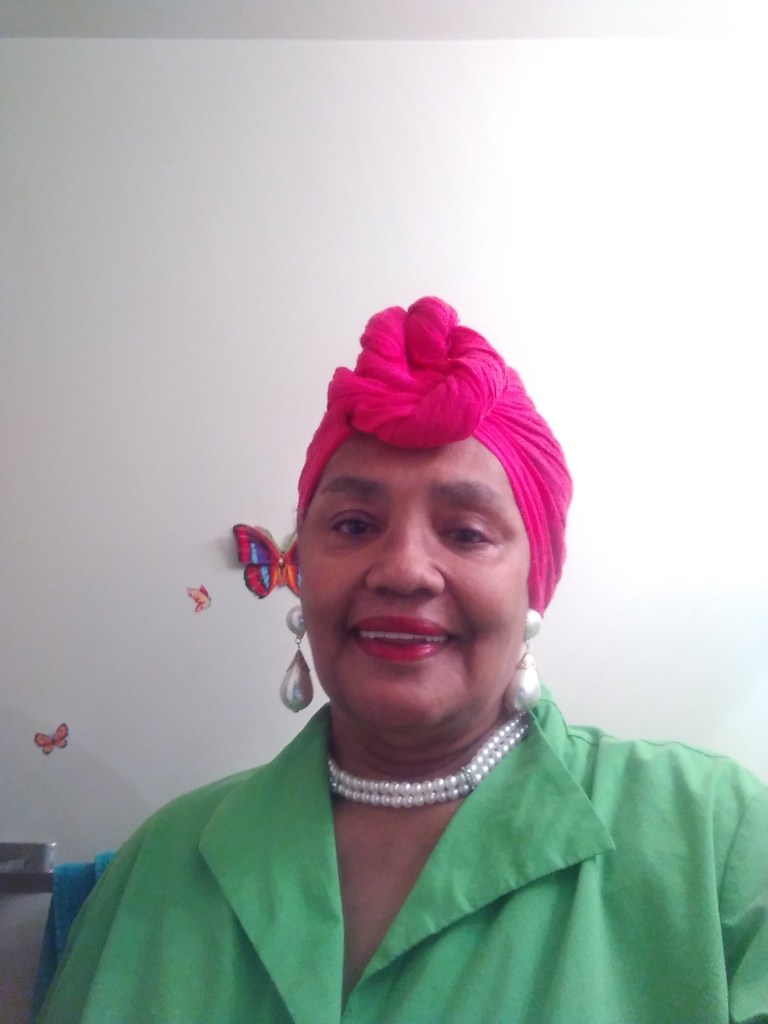
Poet Spotlight on: Carlene Gist

The last poet in my poetry spotlight is Carlene Gist or “T.C.” Not to make Carlene self-conscious, but she is the oldest poet I interviewed in this series and has a broad range of experience. Named after her father, Carlene is the first born of seven children and was born and raised in Detroit, Michigan.

In her own words, this poet says, “Poetry is a genre of writing that I’ve always admired. While in the first grade, I committed to memory and recited “The Night Before Christmas”, for the Christmas play. I’ve been writing but mostly reading poetry since then. Acting, singing and dancing are a few of my favorite things. I went from beating on tabletops to beating on the djembe, which is something I do to center myself. I hope one day to be a published poet.”


You have witnessed several historical events throughout your years as both a person and a poet. Do you find that current events shape your writing, and if so, how? What kind of events propel you to write poetry?

Being born in the late ’40s, I’ve seen a lot. Current events most definitely influence my sentiments when expressing myself through the written word. Poetry, to me, is one way of expressing one’s feelings and perspectives. I can find poetry in almost anything if I but just be still and observe. I find myself stirred by events that display man’s inhumanity to man on any level.

How has your writing changed over the years?

I used to write only poems that rhymed and a lot of love poems. I now write in free verse and about a variety of subjects. I also like writing haiku.

What influence does being a spoken-word poet play on the way you craft your poems?

I know that poetry, as all forms of art, is subjective. I do give effort in trying to find the most effective words and weave them in a manner that might help the audience receive the sentiment I am aiming to convey.

What poet, living or dead, would you like to meet and have dinner with? What would you serve your special guest?

Edgar A. Poe; Kahlil Gibran; Henry W. Longfellow; Paul L. Dunbar; Langston Hughes; Maya Angelou, to name a few. I would have said my peer, Nikki Giovanni. After hearing Amanda Gorman recite her poem “The Hill We Climb”, I would love to sit, chat, and break bread with her. I’m interested in what the younger generation has to say. I believe pizza might work.

What are your favorite aspects of your own poetry?

I like the way I’ve been able to provoke one to think about what I’m trying to convey.

When do you usually write your poetry?

Usually at the midnight hours-between midnight and three a.m.

What do you do when you experience writer’s block?

It’s really tough for me to start a flow when I’m experiencing writer’s block. Prompts, music, or just write what flows through me and edit later.

It

Written before the new time of 9 min. and 29 sec.

“It” looks into the camera. I watch
Knee on neck, hands tucked comfortably in pockets
Some might say cavalier, I say eviler
A cold and icy stare.
My eyes feel frostbitten, they hurt. I sense danger.
Like an ostrich who buries their eggs in the sand
Like an ostrich who senses danger and can’t run.
I bury my head in my hands. I feel not better but safer
Can I fear what I can’t see?
Under the covers a child will hide for fear of the boogeyman
Two minutes pass,  spread my fingers and peek.
My heart races,  as pressure rises. “It” is still there,  knee on neck
hands comfortably in pockets.  Under my covers I retreat.
Bury my head in my hands a little longer this time.
Hoping this time “it” will surely be gone.  Three more minutes pass
and “it’s” not gone yet.  Still there, icy stare, knee on neck,  hands tucked comfortably in pockets.  Hugging my pillow tight, I start sweating and crying.
A fearful child becomes so scared it will call for their mother.
They trust and believe Mother,  the person who witnessed them take their first breath is able,  and will save them from taking their last if she can.
Sounds of voices unfamiliar to me, I decide to  peek and see.
I’m petrified I can’t breath, “it” won’t leave.  Why must “it” torture me so long?
Three minutes seems like three hours I’ve waited for “it” to cease.
Eight minutes now, seems like eight days of holding my breath , suffocating under my covers.
They say fear leads to hate and hate to destruction
Forty-six seconds later  “it” is still there but George Floyd is not.
Mother came to get him.
I slowly lift my head out of my hands and start to breathe again.
-Carlene Gist

Isabelle Palerma

Poet Spotlight on: LowKey

In her own words, the poet LowKey says this: “I go by the name LowKey. I write about anything and everything that stirs me enough to want to pick up the pen. Blessed with an attention span of a goldfish, the brevity of my literary work comes as a given. Simple yet effective is my writing mantra.”

LowKey writes poetry that hearkens back to more traditional poets, yet has a distinct style all its own. Whether it is one of her short pieces or a longer work, she stops to make readers of her poetry think and contemplate the content of her works. They are a reflection of the world we live in, both our interior realms and the external.


When did you first discover that you were a poet? What was that experience like?

When I was around 18. It was more of a “okay, so I think I can write poems” than a “aha! me is a poet!” I remember being pretty nervous when I asked my mum to have a read. She is an amazing writer and poetry is her thing. I saw her eyes welling up as she was reading the piece. I think that was the first time I realized how my words could actually impact people. It was empowering, humbling, liberating, all at once.

What are some of your favorite subjects to write about? What inspires you to write poetry?

I think the darker shades of human emotions is what I like to explore and write about. We as a society present ourselves in a neatly wrapped package with a red bow around it. What goes on underneath that shimmery wrap is something we usually shy away from or deny. So that is what I love to discover through the words I pen. I think pain inspires me to write the most. I know that might sound a bit whack, but some of the best creative pieces I have written have been from when I was in a dark place. Maybe it is because my need to lean on creativity to express myself is the most during those times.

If you could spend the afternoon with another famous author or poet, who would you choose and why?

Has to be Sir Walter de la Mare, although he isn’t amidst us anymore. He is my absolute favorite. The way he built an entire atmosphere around the reader with his words is beyond amazing. From his poems, he seems to have been pretty intense and quiet. It would be fascinating to see what he really was like.

What is your favorite aspect of writing poetry? What is your least favorite?

I think the healing that comes from writing, regardless of the form of writing is my most favorite aspect. The least favorite aspect is someone out there always does it better and you go, “Damn! why didn’t I think of that!!?”

How did you discover your style of poetry? How did you find your voice as a poet?

I feel like every writer has something unique to offer that might be lost if one tries to emulate. I think “inspired” would be the right word for me here. I like subtlety. I always have. So when I began writing, it was something that came naturally to me.

What advice do you have for poets who are just beginning their careers as poets?

Be honest and unfiltered. Creativity is where you can just let go. So, make the most of it. Most importantly, don’t be swayed by the negativity that your readers might hurl at you. As long as you keep your “writer conscience” clear, it’s all good.

Do you think shorter poetry is easier for readers to digest? What influence has social media had on your writing style, if any?

Oh yes! I am not sure about the digest part, but people nowadays definitely prefer brevity. Social media fortunately has not affected the way I choose to express myself through my writing. The reason I said fortunately is because it is so easy to be engulfed and affected by social media in this day and age. From creating pressure to making you doubt yourself to making you lose your originality because you have fallen prey to trends, social media can take away the voice that it so freely provides as well.

Who are your favorite poets to read?

Beside Sir Walter de la Mare and your pieces, I really like reading Edgar Allan Poe and J. Andrew Schrecker.

Where can readers find more of your writing?

https://www.lowkeyrants.com/


Deception

Little Tommy, five years old
Sat with Grandpa and learnt to fold
Colored papers, ribbons, and casks
Into little party masks.

Birthday masks and ballroom faces
Held together with glue and laces
Funny, scary, bold and rude
Different masks for different mood.

“Why do people hide their skin
Behind a veil, so weak and thin?
Tell me, Grandpa, if you can,”
Tommy asked his grand old man.

Grandpa smiled, a smile of lime.
“People do it all the time,
Scared to come out in the bright
They keep their true self out of sight.”

“They coat all bitterness with sugar and honey-
They cover their sins with grey black money;
The colorful masks cover their lives,
But their real self reflects in their eyes.”

“No mask ever made can cover the mirrors
That show perfectness and all errors;
The greatest gift of God, no lies,
All truth surfaces in one’s eyes.”

“So, be true to your own self,
You’ll need no mask, you’ll need no help-
Let your face reflect the love
That He showers down from Heaven above.”

“Be honest, and love mankind-
These things these days are hard to find;
One by one, these steps will grace
And make the world a happier place.”

-LowKey

Isabelle Palerma