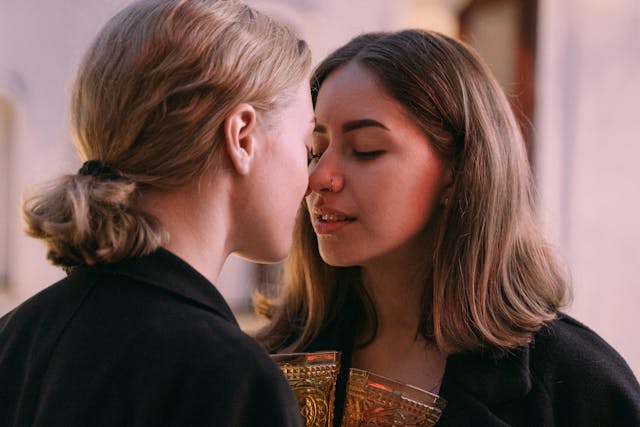
Dream

As you may or may not know, one novel I am currently revising is about a young woman whose dreams begin to interfere with reality.

Here’s a dream I had a while ago. At the time, I thought it was more like a vision than a dream, and I had a professional dream interpreter interpret it for me.


I thought some of you might be interested in reading about that dream.

Life was a whirlwind: people deserting me, families I used to work with shaming me, friends leaving and spreading false rumors, etc. My family was angry with me because I owed them money.

Interpretation: This represents my anxiety, what I am feeling presently.

Everywhere I turned, people were mad. This part was semi-lucid because I kept thinking, “I’m in bed. I’m going to remember this and write it down. I’m going to learn from this. I’m in bed. I can feel the night breeze.”

I ran up the stairs through a class in a lecture hall.

Interpretation: The upward path I was on represents success.

At the top of the staircase, there was a figure I could not see. He apologized for putting me through trials. I told him that I nearly died. I told him that people rejected me and hurt me in many ways.

I told him that he was responsible for things being messed up.

Interpretation: This figure represents a scapegoat, a person who takes the blame for the uncertainty I have in letting others down.

The lecture hall represents the feeling of being “lectured” about morality.

Furthermore, my explanation to this figure about nearly dying and people rejecting me represents that I cannot handle the rejection he is placing on me.

This figure represents a lesson I must learn.

The figure smiled, emanating a powerful, white glow. It was so luminous that I could not see beyond him. I ran through the light and entered a cafeteria.

A girl I knew when I was younger stood in the doorway. She was a friend who later became an adversary. I told her what I told the unseen figure, “I withstood all my trials and found that I am my own hero. I did it all on my own, and I’m still standing. I discovered I can do it on my own.”

Interpretation: The cafeteria represents a place of nourishment and nurturing. I am trying to please this person who stands in the doorway, Judgment. She does not represent Good nor Bad. She is my Experiences. Because of her, I have taught myself to be cautious.

She tells me though I can do it on my own, I don’t have to, then hands me a stone.

She tells me I must polish the stone. She did not give me any further instructions on how to polish the stone, simply that I must polish it.

Interpretation: Her lesson is twofold. She is both advising me and giving me permission to reach out to others. Though she has failed me in the past, others will not necessarily follow suit.

The stone represents Truth. How does one polish a stone? By tumbling it and removing the dirt.

What remains is Truth.

She told me that I will know when my task is done. She told me, “You will know your destiny after you polish the stone.” She also told me, “You saved him from his own noose.”

I held the rock as she faded from sight. As she faded, I heard her say, “Put it under your tongue.”

Interpretation: I saved him by telling him he needed to heal himself. Holding the rock represents me holding my truth. She is telling me to keep my truth a secret.

I saw a beautiful man like no one I had ever seen before. He emanated a radiance, and I felt my heart swell.

“Not this one,” a voice said.

I kept walking and arrived at a staircase that sloped and curved beyond my line of vision.

I walked down the stairs to arrive at a landing. From the landing I could see, the stairs led to a hallway with a door.

I began to choke on the rock under my tongue. I nearly swallowed the stone (the Truth) that I held in my mouth.

Interpretation: The voice is that of Judgment. She has returned to warn me that the first man was not the right man. The sloping staircase represents an unclear path. It could lead to a great success or a terrible downfall. The hall leading to a door represents the unknown as well. The door could be an escape out or a prison within. I do not enter the doorway, so, whether it is an escape or a prison is unknown.

As the stone tumbled around my mouth, a man with dove-white skin, dimples, and an amazing jawline ran up the stairs to meet me. He watched me gag on the stone, wanting to assist me but unable to help.

I finally coughed and choked up the stone (the Truth). It had tumbled into a glimmering tiger’s eye. The man too transformed but became harder to see. He was still beautiful, just harder to see.

Interpretation: I walked down to meet him, yet he walked up to meet me, but we still met in the middle. By walking down to meet him, this represents I must lose something to meet him.

He held in his hands a noose, and around his neck, he wore a placard that said his name.

The voice said, “He is the one.”

Interpretation: He has removed the noose (a leash), and by doing so, the man is finally free. Judgment has again presented itself to say he is the one, but something has changed. He is free, and of his free accord, he ran up the stairs to meet me and underwent his own transformation.

The dream is saying I must hold my truth until it is polished and clean. When the time is right, I must choose between speaking it-freeing it from my mouth-or swallowing it.

Isabelle Palerma

The Ugly Word for Rebecca: a Short Fiction

Ever since I met Rebecca, I vowed to never separate ourselves. To be entwined with her. But to be inextricable to the one you love can be seen as unhealthy, Mother said. So I found times where I’d be away from her. Brief pockets of time.

And yet, even when I was away, I found myself thinking of her. I remember the first moment I first saw her. I was walking down Main Street, and I caught a glimpse of her through the window of the dress shop. I had no excuse to go into a dress shop naturally, but I remember fumbling around and telling Penelope, the dressmaker, something about my mother’s upcoming birthday. I had muttered something about wanting to surprise her with a dress, but the whole time, my eyes were on Rebecca.

She didn’t even look like she belonged there. Her gaze haunted me, and I suppose Penelope noticed the way I stared, my eyes lingering over Rebecca. She chuckled a bit, and then acknowledged my brazen desperation, my lascivious desire. “That’s Rebecca,” Penelope told me at the time, “bring her home if you’d like.” Shaking her head, she added, “The girls these days think wooden mannequins like Rebecca are outdated.”

Mannequin?

What an ugly word for my queen.

I ignored the jab and bought my mother’s dress, the pretense under which I came to see my newfound partner. Once purchased, I scurried out and hastened home.

Of course, Mother turned up her nose at Rebecca. Mother has always been a snob. I supposed Rebecca wasn’t haute couture enough for her, in her simple tea-length dress, but I found her stunning.

Mother and I still lived together, but she often stifled me, tutting at my choice in books or television. Sometimes, turning up her nose in the food I brought home from the grocer.

But now, Rebecca.

I put my foot down. I told her I loved her and I loved Rebecca. That she had to respect our love.

She scoffed but did not reply.

Finally, I heard her mutter something about wooden mannequins under her breath.

There was that ugly word again. Mannequin. Rebecca and I retired to bed early that evening.

I touched her tenderly as we lay in bed. On her back, she stiffened as I murmured, “I noticed you didn’t touch your dinner.”

Reproached by her silence, I kissed her cheek and said good night.

The next morning, I helped Rebecca out of bed. It was cold outside, so neither of us felt like getting up, but we knew we needed to. I brought her tea, but she didn’t drink it. I offered her coffee, but she wouldn’t speak.

Finally, as the three of us sat at the table, Mother suggested I get groceries before the snow started coming down worse.

I looked toward Rebecca, hoping she would join me – or at the very least, acknowledge me going into the snow storm. She punished me with silence. I hugged her tightly before I left.

I whispered to her, “I love you.”

The ensuing silence stung and as I reached the door, I wiped the tears from my eyes as she stared at me blankly. It was as though she had no emotions toward me whatsoever, but I knew that couldn’t be the case.

We’d shared such a connection.

“I’ll be home soon,” I assured her.

Mother rolled her eyes.

***

As I unpacked the brown paper bags from the back of our station wagon, I smelled the smoke. Mother must have found some firewood around back and made a fire.

A part of me was relieved. The warmth would be nice.

I placed the bags on the Formica counters in the kitchen and began to organize the groceries, inhaling the deep woodsy smell as I did. Jars of pickles and blocks of cheese. Deli meat. Loaves of bread. Eggs. Cartons of milk. Everything I could think of.

I didn’t remember anyone dropping off firewood yet this year, it occurred to me, as I was putting the deli meats in the refrigerator. Then, I grabbed a jar of pickles, ready to pack them away until we needed them when I thought to check on my mother and Rebecca. That’s when the thought occurred to me.

The ugly thought.

The one I kept telling myself not to think.

How Penelope told me and my mother told me and how everyone laughed at me because Rebecca was a wooden mannequin.

And in that moment, I remembered without a shadow of a doubt we didn’t have firewood.

But we had an ax and my girlfriend whom my mother despised.

The only thing left when I got to the fireplace was my mother prodding Rebecca’s head deeper into the fire. My beloved’s eyes twinkled from the flames as my mother giggled with glee.

“Turns out,” my mother said, laughing, “your girlfriend is good for something.”

Isabelle Palerma

Lost: a Short Fiction

Take a line from one of your favorite songs and make it your first sentence. (July 28, 2025, First Line Prompt.)


“i think i saw you in my sleep, darling. i think i saw you in my dreams.(“such small hands”, la dispute.)

I think I saw you in my sleep, darling. I think I saw you in my dreams. I’ve been having the same series of dreams for months now, and it’s always the same girl in them, holding the same rabbit, whispering words in a language I don’t understand.

It’s haunting me how I see so much that I don’t comprehend, but it’s you. I think it’s you I saw in my sleep. You hold a rabbit in your arms and stare at me, your eyes dead and cold, always whispering words I cannot fathom.

But I want to.

I want to understand. Because it’s been months of these dreams, your crooked smile, my broken heart. I feel like I’m failing you somehow because you keep reappearing like a resurrection, and yet, every time, I don’t understand. I can’t understand.

You must know how stupid it makes me feel to see you each time and gaze into your hollow, empty eyes and not be able to make out a single syllable.

Every night, I see you in my dreams until one night, you’re there, and you whisper a word I recognize, “Lost,” you utter.

And before I can even begin to formulate my reply, I feel my stomach sink and I hurtle backwards into my bed and awaken.

The next night, when I dream you, your eyes glisten and don’t look so empty, and instead of speaking a foreign language, you simply say the same word again and again until it seems meaningless practically, “Lost. Lost. Lost. Lost. Lost.” Like a litany. Like a prayer.

I want to help you. Your rabbit has run away, and I ask you if your rabbit is lost. You shake your head violently.

Lost,” you whisper again.

Darling, I want to know what is lost, but I’m starting to think it might be you.

Isabelle Palerma

This short story is entirely my own content – no A.I. used to create this.

Spirits Follow Me Here, Too: a Short Fiction (Part III)

May is National Short Story Month, and in honor of National Short Story Month, I decided to write a short story combining my interest in tarot and witchcraft with fiction. I hope you enjoy the result. Please be sure to check out Part I here and Part II here.


That night, I followed Vee home like a street urchin or an orphan, and I suppose, in a way, I was. My own mother already gave me up once, washed her hands of me like Macbeth. The blood still stained her hands as well, though not nearly as violent as his, I suppose. My nonna had died – the ultimate abandonment, and my dad, well, who knows what happened to him.

Everything inside me that had felt crushed and stifled was suddenly expansive as the sky and unlimited. I felt like all the furniture of my heart that had been cramped into a dollhouse of an existence was suddenly opened up, and I didn’t know what to do with all of those emotions.

Vee looked at me, unadorned and plain, flat-chested, and dark-haired, and told me something no one had ever said before. She told me I was beautiful, and when her lips brushed against mine, everything inside of me unfurled.

Where I simply existed before, now, I had come alive. Her touch electrified me. This is what drugs felt like, I was sure of it. The slow honey drip of lust before the drop in the pit of my stomach, flipping me upside down like every cliché. My skin prickled with tiny goosebumps, and when she asked if I was cold, I looked at her in surprise.

Temperature was such a meaningless concept. I just felt alive and aloft with something as transformative as love. It was beautiful as every lyric that had ever been penned, and when her lips touched mine, I wanted to write her sonnets and villanelles and odes.

I wanted to kiss her everywhere all of the time.

And we started to.

We started to explore each other. Cartographers mapping curvatures and ridges. Learning hills and rises as well as the valleys and smooth spots. Her hands found my tunnel and explored that, caressing me sweetly as her lips made their home against my skin.

Again and again.

The spirits followed me here, too. I thought they giggled because I found “The One”.

I did not hear the cruelty in their laughter because I was busy falling madly in love with Vee.

Isabelle Palerma

This short story is entirely my own content – no A.I. used to create this.

The Pigman: a Short Fiction

For National Short Story Month, I’m experimenting with writing more short stories.

Now, I’ve recently discovered that the United States’ current administration is slashing funding for the National Endowment for the Arts and continuing to ban more books by BIPOC authors as well as LGBTQIA+ authors.

As a result, I thought it’d be important to write short stories, based on titles alone, prompted by books that have been banned. I’m choosing to write based on fiction I haven’t read so as not to encourage the story I write.

This second one is called “The Pigman” by Paul Zindel.


The Pigman

Called me “The Pigman” since I worked with pigs. Told me I stank like one too. Always kept away from people. They wanted nothing to do with me anyhow. Only went into town to do my shopping but noticed sometimes, the shopgirl looking at me extra-long. I figured it was because of the stink.

I wanted to say sorry. She looked sweet. The type you’d figure for an angel. The kind of girl you didn’t expect to see working at a grocery store but want to take out to dinner.

But I was just The Pigman. What’d I know about women?

I had a wife once.

She left me. Not because of the pigs. She understood what it meant to be a farmer’s wife. Naw, she got bored of me. Told me I didn’t have a personality anymore. That it must have dried up when our boy Charlie died.

Ain’t that what happens to folks though? When someone dies, a part of you just goes with them?

Anyway, this shopgirl had sad eyes. She looked like maybe she’d understand some things. Maybe she’d be okay with quiet. Maybe we’d listen to music and hold hands.

I’m not just The Pigman, after all.

“Hey,” I said to her one afternoon after she bundled all my groceries together into a sack. She looked at me with those sad, green eyes. She looked like she wanted to say something back.

“Yeah?” she said finally, her voice soft.

“What do you do for fun?” I asked, keeping my voice low. Felt like maybe I could spook her. I didn’t think I smelled bad. Got a shower before I left the house, but maybe there’s a lingering stink. Pigs are clean animals though, you know, unlike what folks think.

Her lips twisted up into a smile. “I like to dance,” she admitted, “but usually, my feet are sore after work, so sometimes, I just like to listen to music.”

“Maybe,” I said, then hesitated. I gnawed the corner of my cheek. “Maybe we could listen to music together some time. I’ve got a good little setup. Nothing too fancy, but some keen speakers. A decent sound system.”

“Yeah?” she answered back. “I think I’d like that.”

I nodded. “Great. Stop by my farm. It’s the only one on top of the old hill. You’ll find your way.”

“Hey,” she called as I was leaving, “what should I call you?”

I prayed she wouldn’t call me Pigman – not to my face or behind my back.

“How about my name?” I suggested. “It’s been years since anybody’s had the decency to do that.”

Her smile widened. “Of course I’d call you by your name. I’m asking what your name is, you old goose.”

It was my turn to smile. Maybe she didn’t know me as The Pigman. Maybe she just didn’t know what to call me. “Jonathan,” I told her, “call me Jonathan.”

“And I’m Penelope.”

Jonathan and Penelope.

I could get used to the sound of that.

Isabelle Palerma

According to Kaitlin Oglesby, The Pigman is banned in places like Texas and Missouri because of alcohol use and partying, scenes involving abusive family and manipulation, and due to language.

This short story is entirely my own content – no A.I. used to create this.