Poet Spotlight on: William Goldspiel

William Goldspiel is a poet by passion; though few of his works have seen the public eye, he has been writing since he could hold a pen in his hands. As a young child, he wrote a page a day in his book after school. He is in the process of rewriting his current works.

William’s style can be considered unconventional at first glance, but when you read more of his poetry, you begin to understand his rhythm and cadence. He can have a polarizing presence – in fact, when I first talked to William, he infuriated me because of a purposefully poorly written poem. Little did I know, it was purposeful, and he is actually a very talented, if sometimes obscure, poet. His poems remind me a bit of e.e. cummings, in the vein that I have to reread them often to fully understand them.


I know it’s a cliché, but what inspires your poems? How do you know what direction you want them to go in?

Most often, I find myself hit by a line or a series of words, an image, or a concept from out of nowhere. Often, it comes out in a long first draft, though sometimes it starts and stops for a while (years) as I work out what they mean.  Generally, what inspires my poems is the same thing that inspires all the forgotten notes files on my PC. There’s not really a rhyme or reason as to why something works or not. 

Where I intend to take a poem and where it goes depend on the poem really. I remember while writing B. Solid/Liquid/Gas I had to hit three different story beats, but the beats themselves came as I was writing them.  I would say that I mostly find the direction when I’m there. 

A lot of poets seem to think that because poetry is a form of self-expression, it should not be edited; otherwise, it censors the poets’ intention or somehow convolutes the message. As a poet who clearly puts effort into his work, what are your thoughts on this?

When I was a kid, I didn’t know how to edit.  So I just wrote and when it was done, it was done.  When I learned to really go back and fix my writing is when I became a better writer, and it’s the part I stress to anyone starting out. [Emphasis my own, not William’s.] It’s why simple things like a spell check can make such a huge difference in the quality of your (and not you’re) writing. 

What do you do when you feel blocked? What are some of your favorite subjects to write about? Least favorite?

Distraction is basically all you’ve got. Back when I was routinely productive, I would take breaks between writing to play Civilization.  I actually wrote a book that way. 

I have a core group of people who have followed me from story to story, so no matter if my book takes place in 1980s Colorado or after the sun has gone nova in an extire galaxy away it will probably be about how they would respond to the situations.  I also like writing indecipherable metaphors, a unified theory of everything, the words “you” “fuck” and sometimes “duck”, and nonsense.  I dislike actually doing any writing at all, as it’s not only emotionally and mentally taxing, but I never have any idea if I’m doing it right. 

We’ve discussed how you use George Carlin as an inspiration for titles. What poets, lyricists, comedians, etc. inspire your poetry? What do you take away from each of them?

I got the idea for the structure of matingsong [William’s in-progress poetry book] from misremembering a Kafka story that completely slips my mind at the moment.  He (or the translation) used indentation to great effect in the story and it created the B, etc. [William’s structuring device in his poetry book.]

Here’s the place where I admit that I haven’t read any poetry and everyone outs me as a fraud.  I do enjoy Vonnegut, Bradbury, King, Kafka, and Douglas Adams. 

Despite the fact that I name-dropped them in a title, I’m not inspired by Daft Punk. 

What’s the most difficult thing about being a poet?

Trying to force it when it isn’t there.  Especially when you have something and then it stops.  You like what you’ve got going and now it’s just not there any more.  Then you push and make it work and you question if anything you’ve ever written has ever been good. 

Why do you write poetry?

When I get that thought, that image, it’s something that I want to make real. 

What emotions elicit the best poems in you?

Longing.  Plummeting, pit in your stomach rising, endless falling.  Not hopeless, but certainly about to crash.  Also, Sardonic glee.  Triumphant wonder.  Peevishness. Love. 


B. Snowfall
Frost clings to your eyelashes sending diamond rays across your sight. You’re the ideal vision of a makeup advertisement
1)A perfection untouchable
a)even if they’re using the brand the makeup is still applied by artists and you can never hope to achieve the effect at home
b)much too beautiful for the average person to ever hope to attain
and that’s only starting with your eyes. I’m in wonder at your hair, something that can pool underneath your lying form to create a black canvas that hides all manner of linen; strung tight coiled rope down and up your back, into your hands, nervously fidgeting with icicles on clinging strands. It’s like a slowly moving snap fan, with seamless transition.
You stand on a fire exit, broad enough to turn into a porch. Are you smoking? I don’t know. It’s cold enough out that your breath mists around you anyway. You’re leaning on a railing overlooking the entrances to a few lower built buildings yet still high enough to see most of the city.
1)Why are you always up high? I’m terrified of heights.
I wish you would move so I could describe your motion. It’s melted metal flowing into place with mechanical precision. There’s the smoothness the liquid perfection, with this robotic touch that gives every motion a feeling of finality to it. When you fly you’re a rag doll tossed around by those behemoths in your back, if you let go of your iron will your limbs jerk with each metal wing beat.
– William Goldspiel

Isabelle Palerma

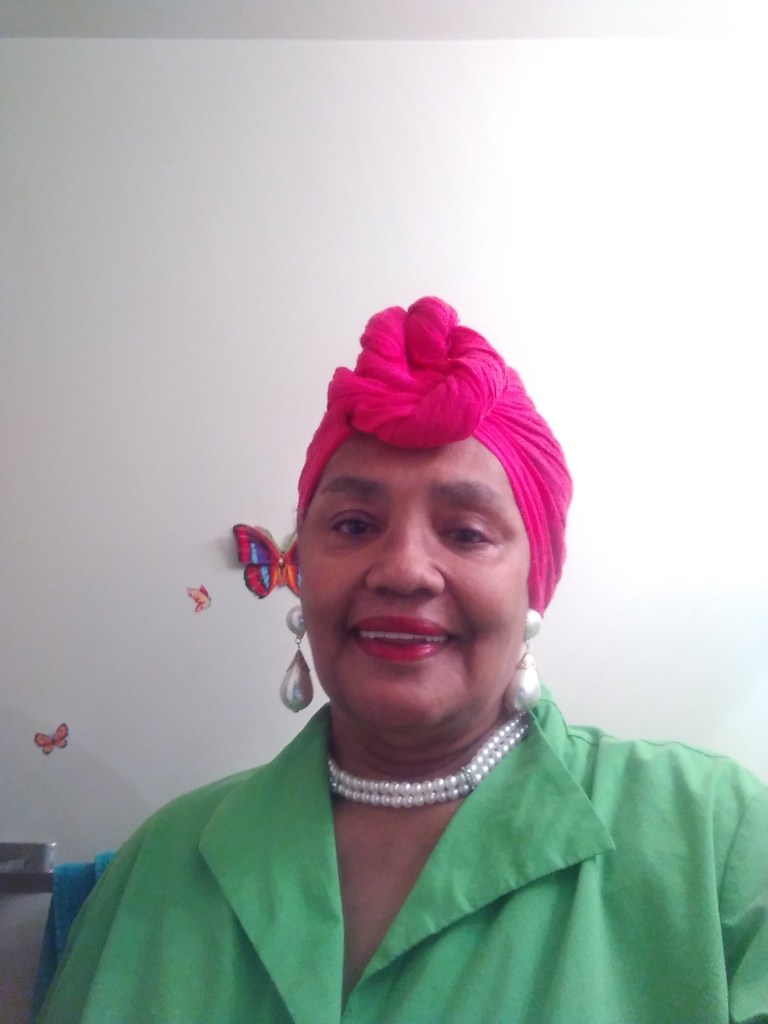
Poet Spotlight on: Carlene Gist

The last poet in my poetry spotlight is Carlene Gist or “T.C.” Not to make Carlene self-conscious, but she is the oldest poet I interviewed in this series and has a broad range of experience. Named after her father, Carlene is the first born of seven children and was born and raised in Detroit, Michigan.

In her own words, this poet says, “Poetry is a genre of writing that I’ve always admired. While in the first grade, I committed to memory and recited “The Night Before Christmas”, for the Christmas play. I’ve been writing but mostly reading poetry since then. Acting, singing and dancing are a few of my favorite things. I went from beating on tabletops to beating on the djembe, which is something I do to center myself. I hope one day to be a published poet.”


You have witnessed several historical events throughout your years as both a person and a poet. Do you find that current events shape your writing, and if so, how? What kind of events propel you to write poetry?

Being born in the late ’40s, I’ve seen a lot. Current events most definitely influence my sentiments when expressing myself through the written word. Poetry, to me, is one way of expressing one’s feelings and perspectives. I can find poetry in almost anything if I but just be still and observe. I find myself stirred by events that display man’s inhumanity to man on any level.

How has your writing changed over the years?

I used to write only poems that rhymed and a lot of love poems. I now write in free verse and about a variety of subjects. I also like writing haiku.

What influence does being a spoken-word poet play on the way you craft your poems?

I know that poetry, as all forms of art, is subjective. I do give effort in trying to find the most effective words and weave them in a manner that might help the audience receive the sentiment I am aiming to convey.

What poet, living or dead, would you like to meet and have dinner with? What would you serve your special guest?

Edgar A. Poe; Kahlil Gibran; Henry W. Longfellow; Paul L. Dunbar; Langston Hughes; Maya Angelou, to name a few. I would have said my peer, Nikki Giovanni. After hearing Amanda Gorman recite her poem “The Hill We Climb”, I would love to sit, chat, and break bread with her. I’m interested in what the younger generation has to say. I believe pizza might work.

What are your favorite aspects of your own poetry?

I like the way I’ve been able to provoke one to think about what I’m trying to convey.

When do you usually write your poetry?

Usually at the midnight hours-between midnight and three a.m.

What do you do when you experience writer’s block?

It’s really tough for me to start a flow when I’m experiencing writer’s block. Prompts, music, or just write what flows through me and edit later.

It

Written before the new time of 9 min. and 29 sec.

“It” looks into the camera. I watch
Knee on neck, hands tucked comfortably in pockets
Some might say cavalier, I say eviler
A cold and icy stare.
My eyes feel frostbitten, they hurt. I sense danger.
Like an ostrich who buries their eggs in the sand
Like an ostrich who senses danger and can’t run.
I bury my head in my hands. I feel not better but safer
Can I fear what I can’t see?
Under the covers a child will hide for fear of the boogeyman
Two minutes pass, spread my fingers and peek.
My heart races, as pressure rises. “It” is still there, knee on neck
hands comfortably in pockets. Under my covers I retreat.
Bury my head in my hands a little longer this time.
Hoping this time “it” will surely be gone. Three more minutes pass
and “it’s” not gone yet. Still there, icy stare, knee on neck, hands tucked comfortably in pockets. Hugging my pillow tight, I start sweating and crying.
A fearful child becomes so scared it will call for their mother.
They trust and believe Mother, the person who witnessed them take their first breath is able, and will save them from taking their last if she can.
Sounds of voices unfamiliar to me, I decide to peek and see.
I’m petrified I can’t breath, “it” won’t leave. Why must “it” torture me so long?
Three minutes seems like three hours I’ve waited for “it” to cease.
Eight minutes now, seems like eight days of holding my breath , suffocating under my covers.
They say fear leads to hate and hate to destruction
Forty-six seconds later “it” is still there but George Floyd is not.
Mother came to get him.
I slowly lift my head out of my hands and start to breathe again.
-Carlene Gist

Isabelle Palerma

Un Cento: A Poem

From the Academy of American Poets, a cento is derived from the Latin word for “patchwork”. The cento (or collage poem) is a poetic form composed entirely of lines from poems by other poets.

Love,
what is love?
I tried to answer,
but our language had been lost
(and forgotten).
So, love’s face may still seem love
(to me).

Everything carries me
(to you).

Love,
what is love?
I tried to answer,
but our language had been lost
(and forgotten).

If little by little,
you stop loving me,
I shall stop loving you…

If suddenly
you forget me
do not look for me…

Love,
what is love?
I tried to answer,
but
our language had been lost.

If I were a poet,
I’d kidnap you.
Lyric you in lilacs.

If suddenly
you forget me,
do not look for me.

Isabelle Palerma

Poems Used:
  • “Love — What is Love?”, Robert Louis Stevenson.
  • “In the Dusky Path of a Dream”, Rabindranath Tagore.
  • “Sonnet 93”, William Shakespeare.
  • “If You Forget Me”, Pablo Neruda.
  • “Kidnap Poem”, Nikki Giovanni.

Poet Spotlight on: LowKey

In her own words, the poet LowKey says this: “I go by the name LowKey. I write about anything and everything that stirs me enough to want to pick up the pen. Blessed with an attention span of a goldfish, the brevity of my literary work comes as a given. Simple yet effective is my writing mantra.”

LowKey writes poetry that hearkens back to more traditional poets, yet has a distinct style all its own. Whether it is one of her short pieces or a longer work, she stops to make readers of her poetry think and contemplate the content of her works. They are a reflection of the world we live in, both our interior realms and the external.


When did you first discover that you were a poet? What was that experience like?

When I was around 18. It was more of a “okay, so I think I can write poems” than a “aha! me is a poet!” I remember being pretty nervous when I asked my mum to have a read. She is an amazing writer and poetry is her thing. I saw her eyes welling up as she was reading the piece. I think that was the first time I realized how my words could actually impact people. It was empowering, humbling, liberating, all at once.

What are some of your favorite subjects to write about? What inspires you to write poetry?

I think the darker shades of human emotions is what I like to explore and write about. We as a society present ourselves in a neatly wrapped package with a red bow around it. What goes on underneath that shimmery wrap is something we usually shy away from or deny. So that is what I love to discover through the words I pen. I think pain inspires me to write the most. I know that might sound a bit whack, but some of the best creative pieces I have written have been from when I was in a dark place. Maybe it is because my need to lean on creativity to express myself is the most during those times.

If you could spend the afternoon with another famous author or poet, who would you choose and why?

Has to be Sir Walter de la Mare, although he isn’t amidst us anymore. He is my absolute favorite. The way he built an entire atmosphere around the reader with his words is beyond amazing. From his poems, he seems to have been pretty intense and quiet. It would be fascinating to see what he really was like.

What is your favorite aspect of writing poetry? What is your least favorite?

I think the healing that comes from writing, regardless of the form of writing is my most favorite aspect. The least favorite aspect is someone out there always does it better and you go, “Damn! why didn’t I think of that!!?”

How did you discover your style of poetry? How did you find your voice as a poet?

I feel like every writer has something unique to offer that might be lost if one tries to emulate. I think “inspired” would be the right word for me here. I like subtlety. I always have. So when I began writing, it was something that came naturally to me.

What advice do you have for poets who are just beginning their careers as poets?

Be honest and unfiltered. Creativity is where you can just let go. So, make the most of it. Most importantly, don’t be swayed by the negativity that your readers might hurl at you. As long as you keep your “writer conscience” clear, it’s all good.

Do you think shorter poetry is easier for readers to digest? What influence has social media had on your writing style, if any?

Oh yes! I am not sure about the digest part, but people nowadays definitely prefer brevity. Social media fortunately has not affected the way I choose to express myself through my writing. The reason I said fortunately is because it is so easy to be engulfed and affected by social media in this day and age. From creating pressure to making you doubt yourself to making you lose your originality because you have fallen prey to trends, social media can take away the voice that it so freely provides as well.

Who are your favorite poets to read?

Beside Sir Walter de la Mare and your pieces, I really like reading Edgar Allan Poe and J. Andrew Schrecker.

Where can readers find more of your writing?

https://www.lowkeyrants.com/


Deception

Little Tommy, five years old
Sat with Grandpa and learnt to fold
Colored papers, ribbons, and casks
Into little party masks.

Birthday masks and ballroom faces
Held together with glue and laces
Funny, scary, bold and rude
Different masks for different mood.

“Why do people hide their skin
Behind a veil, so weak and thin?
Tell me, Grandpa, if you can,”
Tommy asked his grand old man.

Grandpa smiled, a smile of lime.
“People do it all the time,
Scared to come out in the bright
They keep their true self out of sight.”

“They coat all bitterness with sugar and honey-
They cover their sins with grey black money;
The colorful masks cover their lives,
But their real self reflects in their eyes.”

“No mask ever made can cover the mirrors
That show perfectness and all errors;
The greatest gift of God, no lies,
All truth surfaces in one’s eyes.”

“So, be true to your own self,
You’ll need no mask, you’ll need no help-
Let your face reflect the love
That He showers down from Heaven above.”

“Be honest, and love mankind-
These things these days are hard to find;
One by one, these steps will grace
And make the world a happier place.”

-LowKey

Isabelle Palerma

Poet Spotlight on: Brandan T.C. McCarty

Poet Brandan T.C. McCarty lives in Washington and in addition to writing poetry, he is interested in music and art. As a member of the Makah tribe, he has been a dancer, singer, and artist in that culture.


Brandan, you have said before music influences your writing. How exactly does music play a role on the poetry you create?

Yes, music is an influence. I listen to a large base of music because of family and friends introducing me to new music. It depends on the music sound being played, and it could just be a lyric(s). Metallica is a huge influence.

Writing is a form of art, but I know you also paint. What does the intersection of art and writing mean to you?

In ’01, I was hurt emotionally by a teacher in art college. I would destroy any art I created, so I switched to writing to deal with traumatic past events. In ’11, I started to work with acrylic paints. By ’18, I became a visual artist as well as a New Age Coastal Artist for my Native art. The past two and half years, I have been using many mediums and platforms to create art pieces. I still wrote, but not as much. I figured why not do both and maybe blend them together in some pieces. ‘The Wanderer’ is close to a visual concept of what I am evolving into as an artist.

Your Makah roots are very important to you, as is family and knowing your history. This is evident in the poetry you write. What would you advise the young poet who is not as well-versed in their past as you?

My roots are important. My dad has said to me all that I do reflects back on your teachers and persons involved with you. My mom said the same thing in her way of communicating to me. I read. I read just about anything. I was told to figure out the style you want to write, and then go find published work similar so your skill can be honest. As for past or culture, read and spend time with families and friends. Listen, take time to actually listen. Even if it is a day spent sitting in a kitchen drinking coffee and watching grandpa carve, or dad paint a mask. Open yourself to learn, to fall and get back up.

How would you describe your being a father as an influence on your poetry?

I used to have some selfish habits, and those habits almost claimed my life. I came to realize, I don’t want this for my eldest son. Nor any other child that looks up to me. So I turned from booze, I went back to arts. Poetry is art, to me just about anything could be considered an art. Now, with my baby I have been relearning to sing my Native Family songs and dancing the dances. I have been away too long from it. I guess I can say, being a father has enriched my poetry with more care and love than I had before.

Who are some of your favorite poets? What aspects of their poetry appeal to you as a reader? As a writer?

Charles Bukowski, as a reader, good comic. Biography spoken in poetry verse. As a writer, someone once said my work reminds him of Bukowski. Raymond Carver, as a reader, his work involving water or daily life. As a writer, I met Tess Gallagher and she said I reminded her of her late husband, Raymond. J. A. Janice has one book of poetry. Read a little a bit of it. A strong woman, and a gentle soul. She writes crime novels. Met her a couple times in person. My mom got me into her works. My late Mama Valerie, because she had a talent of words and wish I recorded some of her work better.

Where can readers find more of your writing?

https://www.postpoems.org/authors/majesticdravon 
https://allpoetry.com/Brandan_Tototch
www.facebook.com/nmpBrandanMc


Gift Exchange

I stand before you, shivering and straggling a
box.
A battered, scarred, worn box full of the
darkness I wish to gift you.
The air I taste and breathe, is excellences of
sweetness.
In my bitter hands, 1 hold my broken dreams
and scattered Spirit.
All the past lovers have left their mark,
tainting my heart and you stand before me
Accepting the box, receiving as a gift and
you set the broken box at our feet
You lift up my dampen chin, my flooded
beard and your lips swim in my waters
You brave the morose salt for a delicate
kiss.
In return, you gift me light. You gift me
soothing songs to dance my heart
I gift you my darkness, and you gift me the
warming light.

Brandan T.C. McCarty

Isabelle Palerma