Poet Spotlight On: Carol Goldstone Majola

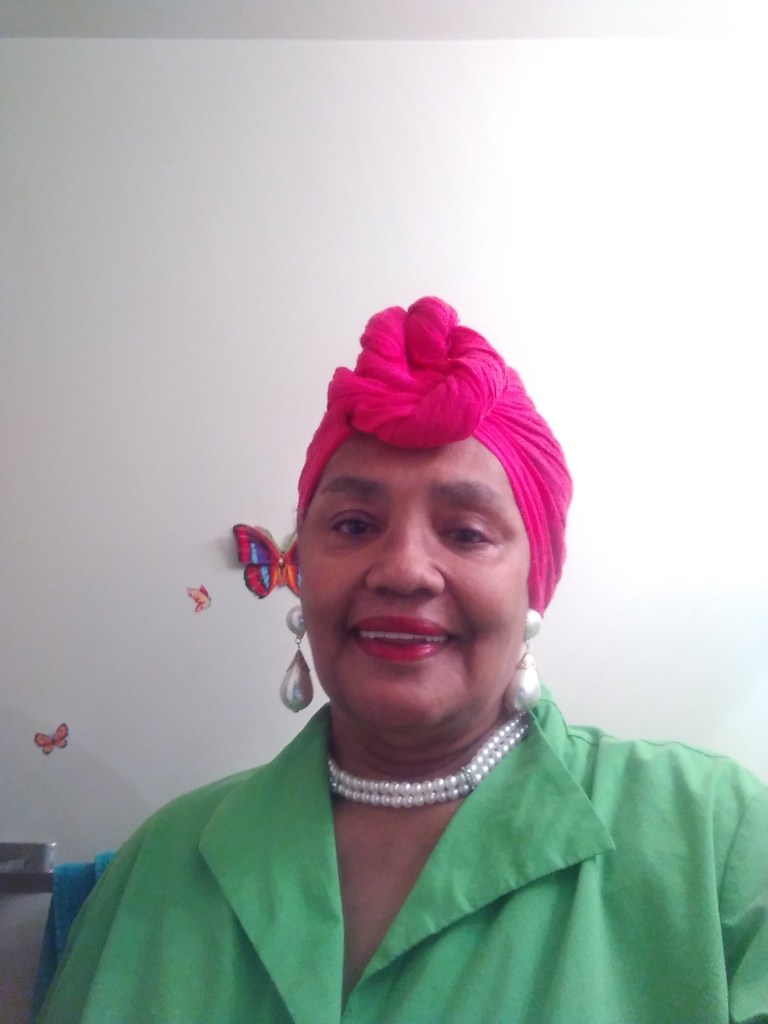
Carol Majola is a trained ECD educator, business management student, self proclaimed poet and author, and aspiring entrepreneur. She is passionate about community building and helping youth tackle social ills affecting them. Majola is advocate for issues such as bullying, GBV, and substance abuse. She believes that her purpose is healing and that words written or spoken are powerful to break but also heal and she found healing in poetry. To Carol, the two most powerful things are love and words.

When did you start writing poetry?

I fell in love with poetry when we were learning about the history of our country when we were in school, when whites and blacks were separated during the apartheid era. And I fell in love with how expressive the writers of the “struggle” were and how they used the art to cope with their pain and loss, to communicate their feelings more eloquently. But it was when I lost my father at the age of nine, that I wrote my first poem.
What are your favorite words?

I am a lover so my favourite word is “love”.

My name “Carol” because it means “a joyful song”. I feel it explains why I love music so much.

Do you have a particular style of poetry you write? Have you ever experimented with form poetry? What were the results?

I do not think I have a particular style of writing my poetry, although most of my poems are in a similar structure. They are more expressive than rhythmic though.

I love words and playing around with words and therefore experimenting with form poetry was inevitable. My first exposure to poetry was form and studying poetry. With my work, I feel that form gave it more structure and allowed me to experiment with my rhyme scheme. Although the consideration of my lines and stanzas made it seem limiting in how I could express in depth, it did teach me careful consideration of my word choice.

April is Global Poetry Writing Month. Who are some of your favorite poets from around the world?

One of my memorable olden day favourite poet together with the likes of Charles Causley, would be a South African Poet by the name of “KEORAPETSE WILLIAM KGOSITSILE” who was not only a poet but a social and political activist who lived in Exile in the US in 1962. I love how he encouraged interest in Africa, African poetry and the practice of poetry as a performance art. Origins and Santamaria are some of my favorite works by him.

Maya Angelou has always been my favorite, as well as Rudy Francisco. I have my recent favourites who I have experienced through social media – Yaw Osafo (KINGYAW FROM GHANA) residing in the states and Hafsat Abdullahi (HAVFY FROM NIGERIA)…such powerful young poets.


A Conjugal Suicide

Floating, barely breathing
beneath the waters,
In a bottomless ocean.
Drowning, for I sold myself
at the price of trust
I recklessly handed over.
Sun rays cast between my fears,
Water covering my stream of tears,
My wails muffled in the deep,
Not even those shoring at sea
Can see me, nor my weeps hear.
I am dazed swimming in agony,
In a sea a path to which I built
With brick and mortar with which
I tried to build my home
That now lies desolate and forgone.

– Carol Goldstone Majola

Isabelle Palerma

Poet Spotlight on: Jimmy Broccoli

Jimmy Broccoli is a Library Branch Manager by day and a published poet by night with a mission to inspire his readers through imaginative poetic storytelling. His work has been featured in several publications and he released his first full-length book, “Damaged”, on Christmas Day 2021 and compiled the poetry anthology, “Spotlight”, released in March 2022. He enjoys walks on the beach and playing with puppies.

His poetry is raw and tells a story. When you read Broccoli’s poetry, you can feel the emotion of each poem as though you had written it yourself. His poems cut through you like the serrated edge of a knife and don’t hold anything back.


What does poetry mean to you?

I’m a narrative poet, so poetry – for me – is a way to tell stories. Sometimes I write autobiographical poems, sometimes I write fictional accounts – and, often, I write pieces that dwell somewhere in the middle of the two. Much of my writing deals with grief, raw emotions, loss, and death – so poetry, for me, is often a car crash – stories bleeding onto paper or across a computer screen, staining the carpet below. Poetry allows me to express what I would normally keep quiet or secret – it allows me to breathe life into the otherwise unanimated.

When did you begin writing poetry and what has your writing journey been like?


I began writing poetry at age 12 – but didn’t find my “poetic voice” until my early 20s. As an English major at University, I took an upper-level Modern Poetry class and fell in love with confessional poetry – Sylvia Plath, Anne Sexton, Stevie Smith, Edna St. Vincent Millay, and others. My poetic style continues to be heavily influenced by the confessional poets of the mid-1900s.

Whose poetry would you say influences you most? In what ways has it influenced you?  

In addition to the modern confessional poets, my poetry is heavily influenced by music – mostly alternative. The lyrics of Nine Inch Nails, Keaton Henson, Morrissey, and Sigur Ros have been more influential upon my writing than the work of other poets. All of these musical artists write highly emotional, powerful, and raw lyrics – exposing the often strange, dangerous, rebellious, extreme, and dark sides of life. It is within this world I usually write. I keep a flashlight handy.

What is your favorite thing about writing poetry?

Poetry, for me, is the escape hatch behind the bedroom closet that opens into a world similar to ours – but more magical and poetic. Writing as Jimmy, I get the opportunity to be someone else for short periods, while still clinging on to my regular identity and life. It’s often thrilling – and a lot of fun.

What is your least favorite thing about writing poetry?

As a side effect of writing raw, emotional verse, the process of writing a poem can take me out of living for several hours or an entire day. When I write very personal poems, usually filled with painful emotions, I become mentally crippled – it’s much like having a temporary mental meltdown – but knowing it will soon be okay. I go through this until my mind tells me, “Hey, it’s time to function again”. Then, I get up and continue with my day.

Tell me about it. It’s an exhausting process writing an emotionally charged poem. What’s your process like?

I never block off or schedule time to write – ideas come to me and – if I like the ideas – I find the nearest pen and paper or computer and begin writing. For me, editing is a constant phase of the writing process – I edit while writing the initial draft and will revisit the piece to edit for the next day or two. I read every line dozens of times – and every time I make a change, I begin reading the poem from the beginning. On average, the initial draft of a poem takes me 2 – 4 hours to write – while the extra editing time can be fairly short (30 minutes) or take a few hours to complete.

As mentioned above, the writing process – for me – can be a painful one – but it is also therapeutic. Writing is a way for me to shed my demons and get out the emotions that have built up over the years. Writing is a release for me.

Who would you have over for lunch of your literary heroes/heroines and what would you serve? What food and which drinks? Why? What would you talk about over the meal?

Well – if musicians who write beautiful lyrics can be considered, I’d invite singer Jón Þór Birgisson (Jonsi), from Sigur Ros, over for lunch. No other writer, from my experience, reaches the epic emotional states Jonsi brings to music and verse.

Both Jonsi and I are vegan – Jonsi is a raw food vegan – so I’d prepare a large vegan platter that included fruits, vegetables, and nuts or bring a Raw Food Pistachio Zucchini Lasagna. A picnic in the park would be nice. I’d bring a sauvignon blanc (white wine) for me and bring whatever he prefers for him. I’m certain we’d talk about him throughout the meal. He’s a fascinating guy and I know I’d learn volumes from him. He is a hero of mine and spending any time with him would be a high honor.

How has poetry changed you?

Poetry has made me more community-minded. I love being a part of the worldwide poetry community and am a member of a good number of poetry groups online. These relationships – often leading to friendships – inspire my writing and are very enjoyable.

Where can readers find you?

https://amzn.to/3x6o0IP

http://www.jimmybroccoli.com


Broken God

His unshaven posture weakens
He wilts into my arms as if we’re dancing
A delicate dandelion stem exposed to hurricanes
A falling toaster into bathwater
With bubbles

He is crumpled paper and smeared ink
Downturned blue eyes
With confidence hung from rope
Swinging from unstable rafters
Looking down upon a chair with faded and expired paint

I build a fort

Marmalade bed sheets surround his symphony
In stillness, I pronounce him king
Fluffy life rafts in pillowcases
Mix-matched blankets and couch cushions
He sits in silence, thinking only in whispers

With evaporated tears, he falls asleep, handsome
I hold my breath, then exhale diamonds
My emotions spill upon the floor
As I listen to him breathing
-Jimmy Broccoli

Isabelle Palerma

Poet Spotlight on: Carlene Gist

The last poet in my poetry spotlight is Carlene Gist or “T.C.” Not to make Carlene self-conscious, but she is the oldest poet I interviewed in this series and has a broad range of experience. Named after her father, Carlene is the first born of seven children and was born and raised in Detroit, Michigan.

In her own words, this poet says, “Poetry is a genre of writing that I’ve always admired. While in the first grade, I committed to memory and recited “The Night Before Christmas”, for the Christmas play. I’ve been writing but mostly reading poetry since then. Acting, singing and dancing are a few of my favorite things. I went from beating on tabletops to beating on the djembe, which is something I do to center myself. I hope one day to be a published poet.”


You have witnessed several historical events throughout your years as both a person and a poet. Do you find that current events shape your writing, and if so, how? What kind of events propel you to write poetry?

Being born in the late ’40s, I’ve seen a lot. Current events most definitely influence my sentiments when expressing myself through the written word. Poetry, to me, is one way of expressing one’s feelings and perspectives. I can find poetry in almost anything if I but just be still and observe. I find myself stirred by events that display man’s inhumanity to man on any level.

How has your writing changed over the years?

I used to write only poems that rhymed and a lot of love poems. I now write in free verse and about a variety of subjects. I also like writing haiku.

What influence does being a spoken-word poet play on the way you craft your poems?

I know that poetry, as all forms of art, is subjective. I do give effort in trying to find the most effective words and weave them in a manner that might help the audience receive the sentiment I am aiming to convey.

What poet, living or dead, would you like to meet and have dinner with? What would you serve your special guest?

Edgar A. Poe; Kahlil Gibran; Henry W. Longfellow; Paul L. Dunbar; Langston Hughes; Maya Angelou, to name a few. I would have said my peer, Nikki Giovanni. After hearing Amanda Gorman recite her poem “The Hill We Climb”, I would love to sit, chat, and break bread with her. I’m interested in what the younger generation has to say. I believe pizza might work.

What are your favorite aspects of your own poetry?

I like the way I’ve been able to provoke one to think about what I’m trying to convey.

When do you usually write your poetry?

Usually at the midnight hours-between midnight and three a.m.

What do you do when you experience writer’s block?

It’s really tough for me to start a flow when I’m experiencing writer’s block. Prompts, music, or just write what flows through me and edit later.

It

Written before the new time of 9 min. and 29 sec.

“It” looks into the camera. I watch
Knee on neck, hands tucked comfortably in pockets
Some might say cavalier, I say eviler
A cold and icy stare.
My eyes feel frostbitten, they hurt. I sense danger.
Like an ostrich who buries their eggs in the sand
Like an ostrich who senses danger and can’t run.
I bury my head in my hands. I feel not better but safer
Can I fear what I can’t see?
Under the covers a child will hide for fear of the boogeyman
Two minutes pass, spread my fingers and peek.
My heart races, as pressure rises. “It” is still there, knee on neck
hands comfortably in pockets. Under my covers I retreat.
Bury my head in my hands a little longer this time.
Hoping this time “it” will surely be gone. Three more minutes pass
and “it’s” not gone yet. Still there, icy stare, knee on neck, hands tucked comfortably in pockets. Hugging my pillow tight, I start sweating and crying.
A fearful child becomes so scared it will call for their mother.
They trust and believe Mother, the person who witnessed them take their first breath is able, and will save them from taking their last if she can.
Sounds of voices unfamiliar to me, I decide to peek and see.
I’m petrified I can’t breath, “it” won’t leave. Why must “it” torture me so long?
Three minutes seems like three hours I’ve waited for “it” to cease.
Eight minutes now, seems like eight days of holding my breath , suffocating under my covers.
They say fear leads to hate and hate to destruction
Forty-six seconds later “it” is still there but George Floyd is not.
Mother came to get him.
I slowly lift my head out of my hands and start to breathe again.
-Carlene Gist

Isabelle Palerma

Poet Spotlight on: LowKey

In her own words, the poet LowKey says this: “I go by the name LowKey. I write about anything and everything that stirs me enough to want to pick up the pen. Blessed with an attention span of a goldfish, the brevity of my literary work comes as a given. Simple yet effective is my writing mantra.”

LowKey writes poetry that hearkens back to more traditional poets, yet has a distinct style all its own. Whether it is one of her short pieces or a longer work, she stops to make readers of her poetry think and contemplate the content of her works. They are a reflection of the world we live in, both our interior realms and the external.


When did you first discover that you were a poet? What was that experience like?

When I was around 18. It was more of a “okay, so I think I can write poems” than a “aha! me is a poet!” I remember being pretty nervous when I asked my mum to have a read. She is an amazing writer and poetry is her thing. I saw her eyes welling up as she was reading the piece. I think that was the first time I realized how my words could actually impact people. It was empowering, humbling, liberating, all at once.

What are some of your favorite subjects to write about? What inspires you to write poetry?

I think the darker shades of human emotions is what I like to explore and write about. We as a society present ourselves in a neatly wrapped package with a red bow around it. What goes on underneath that shimmery wrap is something we usually shy away from or deny. So that is what I love to discover through the words I pen. I think pain inspires me to write the most. I know that might sound a bit whack, but some of the best creative pieces I have written have been from when I was in a dark place. Maybe it is because my need to lean on creativity to express myself is the most during those times.

If you could spend the afternoon with another famous author or poet, who would you choose and why?

Has to be Sir Walter de la Mare, although he isn’t amidst us anymore. He is my absolute favorite. The way he built an entire atmosphere around the reader with his words is beyond amazing. From his poems, he seems to have been pretty intense and quiet. It would be fascinating to see what he really was like.

What is your favorite aspect of writing poetry? What is your least favorite?

I think the healing that comes from writing, regardless of the form of writing is my most favorite aspect. The least favorite aspect is someone out there always does it better and you go, “Damn! why didn’t I think of that!!?”

How did you discover your style of poetry? How did you find your voice as a poet?

I feel like every writer has something unique to offer that might be lost if one tries to emulate. I think “inspired” would be the right word for me here. I like subtlety. I always have. So when I began writing, it was something that came naturally to me.

What advice do you have for poets who are just beginning their careers as poets?

Be honest and unfiltered. Creativity is where you can just let go. So, make the most of it. Most importantly, don’t be swayed by the negativity that your readers might hurl at you. As long as you keep your “writer conscience” clear, it’s all good.

Do you think shorter poetry is easier for readers to digest? What influence has social media had on your writing style, if any?

Oh yes! I am not sure about the digest part, but people nowadays definitely prefer brevity. Social media fortunately has not affected the way I choose to express myself through my writing. The reason I said fortunately is because it is so easy to be engulfed and affected by social media in this day and age. From creating pressure to making you doubt yourself to making you lose your originality because you have fallen prey to trends, social media can take away the voice that it so freely provides as well.

Who are your favorite poets to read?

Beside Sir Walter de la Mare and your pieces, I really like reading Edgar Allan Poe and J. Andrew Schrecker.

Where can readers find more of your writing?

https://www.lowkeyrants.com/


Deception

Little Tommy, five years old
Sat with Grandpa and learnt to fold
Colored papers, ribbons, and casks
Into little party masks.

Birthday masks and ballroom faces
Held together with glue and laces
Funny, scary, bold and rude
Different masks for different mood.

“Why do people hide their skin
Behind a veil, so weak and thin?
Tell me, Grandpa, if you can,”
Tommy asked his grand old man.

Grandpa smiled, a smile of lime.
“People do it all the time,
Scared to come out in the bright
They keep their true self out of sight.”

“They coat all bitterness with sugar and honey-
They cover their sins with grey black money;
The colorful masks cover their lives,
But their real self reflects in their eyes.”

“No mask ever made can cover the mirrors
That show perfectness and all errors;
The greatest gift of God, no lies,
All truth surfaces in one’s eyes.”

“So, be true to your own self,
You’ll need no mask, you’ll need no help-
Let your face reflect the love
That He showers down from Heaven above.”

“Be honest, and love mankind-
These things these days are hard to find;
One by one, these steps will grace
And make the world a happier place.”

-LowKey

Isabelle Palerma

Anorexia: a Poem

I sicken myself with hunger.
If this was a physical disease,
my ribs would be visible through a sheath of skin.
(My rib bones so sharp they could splinter glass.)
Instead, I waste away while appearing strong.
I’d have carved your name on my bones,
but bones fracture and break.

You took a needle to your skin, but this time,
it wasn’t filled with an illness.
You injected yourself with ink,
and ink is my illness, my poison.

If you throw the stars upon the midnight canopy,
a constellation can be found.
In that pattern, my star is home.
But this emptiness gnaws at me, a hunger
that makes me want to devour my own flesh
and cannibalize myself.
Instead, my soul is atrophying with disuse.
(And I pour more and more into myself,
wondering when you’ll return.)

This isn’t a lacuna nor a crater.
You have vanished for longer,
but I have a heart that’s gone beyond starvation.
It’s empty here without you, &
I just wait for your return,
sustaining myself on memories and promises.

Isabelle Palerma