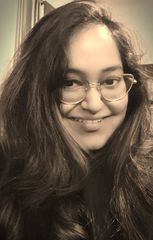
News about my Chapbook & Novel!

Hey there!

It’s been a while since I’ve updated, but if you follow me on social media, (which I highly recommend you do) you’ll know that my chapbook is almost complete! We have a title, my publisher and editors have polished it, and I just have my final checks to do before we take it to print. That being said, we’re doing some pretty unusual and cool things with its formatting that I think you all will be excited to see once it’s in print. I’m so excited to share this labor of love with all of you.

Speaking of labors of love, I’m currently going over the first round of edits for Catching Dreams that my publisher has sent over before sending it to the publisher. The first round of edits involves tightening up the prose, tidying up some redundancies, and just overall polishing it up. From there, it will go to the publisher’s editors, go through more editing, and then, hopefully, we’ll start drafting up a cover and it will – fingers crossed – hit the bookshelves in 2025!

I am so excited to share with you the progress of my journey. Also, while I have been away from my website, two of my poems were published in a local literary magazine called Perspectives. If you are interested in receiving a copy, please let me know and I can send you an autographed copy.

That’s all for now, but be sure to keep checking my website for more updates!

Isabelle Palerma

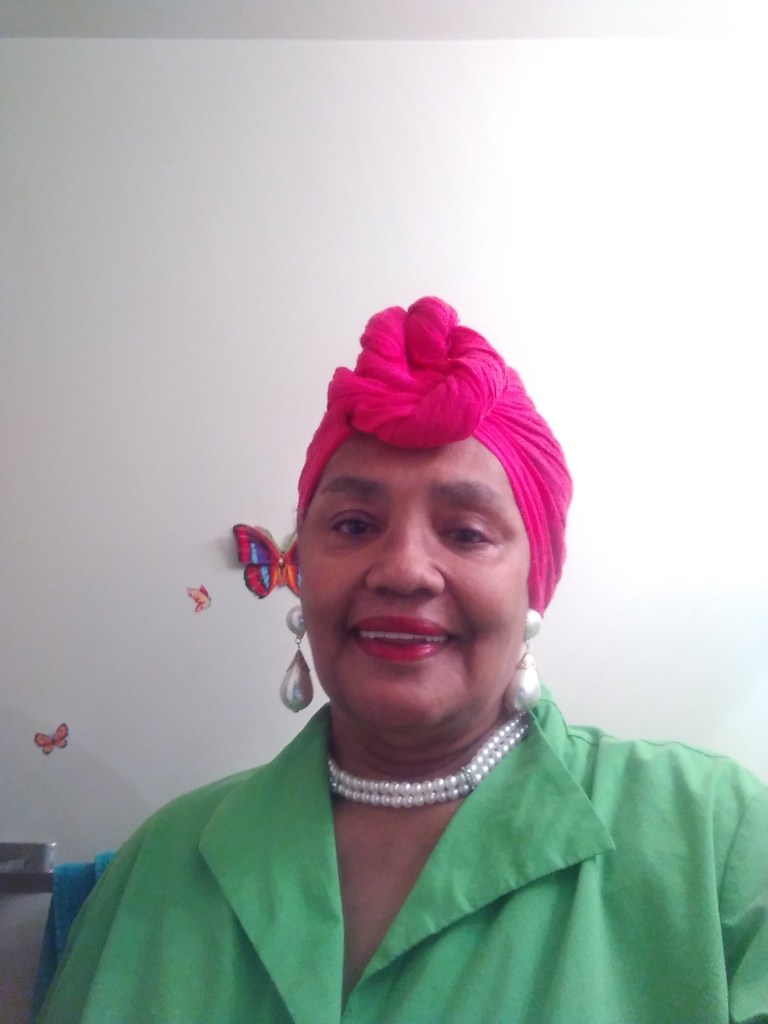
Poet Spotlight on: Carlene Gist

The last poet in my poetry spotlight is Carlene Gist or “T.C.” Not to make Carlene self-conscious, but she is the oldest poet I interviewed in this series and has a broad range of experience. Named after her father, Carlene is the first born of seven children and was born and raised in Detroit, Michigan.

In her own words, this poet says, “Poetry is a genre of writing that I’ve always admired. While in the first grade, I committed to memory and recited “The Night Before Christmas”, for the Christmas play. I’ve been writing but mostly reading poetry since then. Acting, singing and dancing are a few of my favorite things. I went from beating on tabletops to beating on the djembe, which is something I do to center myself. I hope one day to be a published poet.”


You have witnessed several historical events throughout your years as both a person and a poet. Do you find that current events shape your writing, and if so, how? What kind of events propel you to write poetry?

Being born in the late ’40s, I’ve seen a lot. Current events most definitely influence my sentiments when expressing myself through the written word. Poetry, to me, is one way of expressing one’s feelings and perspectives. I can find poetry in almost anything if I but just be still and observe. I find myself stirred by events that display man’s inhumanity to man on any level.

How has your writing changed over the years?

I used to write only poems that rhymed and a lot of love poems. I now write in free verse and about a variety of subjects. I also like writing haiku.

What influence does being a spoken-word poet play on the way you craft your poems?

I know that poetry, as all forms of art, is subjective. I do give effort in trying to find the most effective words and weave them in a manner that might help the audience receive the sentiment I am aiming to convey.

What poet, living or dead, would you like to meet and have dinner with? What would you serve your special guest?

Edgar A. Poe; Kahlil Gibran; Henry W. Longfellow; Paul L. Dunbar; Langston Hughes; Maya Angelou, to name a few. I would have said my peer, Nikki Giovanni. After hearing Amanda Gorman recite her poem “The Hill We Climb”, I would love to sit, chat, and break bread with her. I’m interested in what the younger generation has to say. I believe pizza might work.

What are your favorite aspects of your own poetry?

I like the way I’ve been able to provoke one to think about what I’m trying to convey.

When do you usually write your poetry?

Usually at the midnight hours-between midnight and three a.m.

What do you do when you experience writer’s block?

It’s really tough for me to start a flow when I’m experiencing writer’s block. Prompts, music, or just write what flows through me and edit later.

It

Written before the new time of 9 min. and 29 sec.

“It” looks into the camera. I watch
Knee on neck, hands tucked comfortably in pockets
Some might say cavalier, I say eviler
A cold and icy stare.
My eyes feel frostbitten, they hurt. I sense danger.
Like an ostrich who buries their eggs in the sand
Like an ostrich who senses danger and can’t run.
I bury my head in my hands. I feel not better but safer
Can I fear what I can’t see?
Under the covers a child will hide for fear of the boogeyman
Two minutes pass, spread my fingers and peek.
My heart races, as pressure rises. “It” is still there, knee on neck
hands comfortably in pockets. Under my covers I retreat.
Bury my head in my hands a little longer this time.
Hoping this time “it” will surely be gone. Three more minutes pass
and “it’s” not gone yet. Still there, icy stare, knee on neck, hands tucked comfortably in pockets. Hugging my pillow tight, I start sweating and crying.
A fearful child becomes so scared it will call for their mother.
They trust and believe Mother, the person who witnessed them take their first breath is able, and will save them from taking their last if she can.
Sounds of voices unfamiliar to me, I decide to peek and see.
I’m petrified I can’t breath, “it” won’t leave. Why must “it” torture me so long?
Three minutes seems like three hours I’ve waited for “it” to cease.
Eight minutes now, seems like eight days of holding my breath , suffocating under my covers.
They say fear leads to hate and hate to destruction
Forty-six seconds later “it” is still there but George Floyd is not.
Mother came to get him.
I slowly lift my head out of my hands and start to breathe again.
-Carlene Gist

Isabelle Palerma

Poet Spotlight on: LowKey

In her own words, the poet LowKey says this: “I go by the name LowKey. I write about anything and everything that stirs me enough to want to pick up the pen. Blessed with an attention span of a goldfish, the brevity of my literary work comes as a given. Simple yet effective is my writing mantra.”

LowKey writes poetry that hearkens back to more traditional poets, yet has a distinct style all its own. Whether it is one of her short pieces or a longer work, she stops to make readers of her poetry think and contemplate the content of her works. They are a reflection of the world we live in, both our interior realms and the external.


When did you first discover that you were a poet? What was that experience like?

When I was around 18. It was more of a “okay, so I think I can write poems” than a “aha! me is a poet!” I remember being pretty nervous when I asked my mum to have a read. She is an amazing writer and poetry is her thing. I saw her eyes welling up as she was reading the piece. I think that was the first time I realized how my words could actually impact people. It was empowering, humbling, liberating, all at once.

What are some of your favorite subjects to write about? What inspires you to write poetry?

I think the darker shades of human emotions is what I like to explore and write about. We as a society present ourselves in a neatly wrapped package with a red bow around it. What goes on underneath that shimmery wrap is something we usually shy away from or deny. So that is what I love to discover through the words I pen. I think pain inspires me to write the most. I know that might sound a bit whack, but some of the best creative pieces I have written have been from when I was in a dark place. Maybe it is because my need to lean on creativity to express myself is the most during those times.

If you could spend the afternoon with another famous author or poet, who would you choose and why?

Has to be Sir Walter de la Mare, although he isn’t amidst us anymore. He is my absolute favorite. The way he built an entire atmosphere around the reader with his words is beyond amazing. From his poems, he seems to have been pretty intense and quiet. It would be fascinating to see what he really was like.

What is your favorite aspect of writing poetry? What is your least favorite?

I think the healing that comes from writing, regardless of the form of writing is my most favorite aspect. The least favorite aspect is someone out there always does it better and you go, “Damn! why didn’t I think of that!!?”

How did you discover your style of poetry? How did you find your voice as a poet?

I feel like every writer has something unique to offer that might be lost if one tries to emulate. I think “inspired” would be the right word for me here. I like subtlety. I always have. So when I began writing, it was something that came naturally to me.

What advice do you have for poets who are just beginning their careers as poets?

Be honest and unfiltered. Creativity is where you can just let go. So, make the most of it. Most importantly, don’t be swayed by the negativity that your readers might hurl at you. As long as you keep your “writer conscience” clear, it’s all good.

Do you think shorter poetry is easier for readers to digest? What influence has social media had on your writing style, if any?

Oh yes! I am not sure about the digest part, but people nowadays definitely prefer brevity. Social media fortunately has not affected the way I choose to express myself through my writing. The reason I said fortunately is because it is so easy to be engulfed and affected by social media in this day and age. From creating pressure to making you doubt yourself to making you lose your originality because you have fallen prey to trends, social media can take away the voice that it so freely provides as well.

Who are your favorite poets to read?

Beside Sir Walter de la Mare and your pieces, I really like reading Edgar Allan Poe and J. Andrew Schrecker.

Where can readers find more of your writing?

https://www.lowkeyrants.com/


Deception

Little Tommy, five years old
Sat with Grandpa and learnt to fold
Colored papers, ribbons, and casks
Into little party masks.

Birthday masks and ballroom faces
Held together with glue and laces
Funny, scary, bold and rude
Different masks for different mood.

“Why do people hide their skin
Behind a veil, so weak and thin?
Tell me, Grandpa, if you can,”
Tommy asked his grand old man.

Grandpa smiled, a smile of lime.
“People do it all the time,
Scared to come out in the bright
They keep their true self out of sight.”

“They coat all bitterness with sugar and honey-
They cover their sins with grey black money;
The colorful masks cover their lives,
But their real self reflects in their eyes.”

“No mask ever made can cover the mirrors
That show perfectness and all errors;
The greatest gift of God, no lies,
All truth surfaces in one’s eyes.”

“So, be true to your own self,
You’ll need no mask, you’ll need no help-
Let your face reflect the love
That He showers down from Heaven above.”

“Be honest, and love mankind-
These things these days are hard to find;
One by one, these steps will grace
And make the world a happier place.”

-LowKey

Isabelle Palerma

Poet Spotlight on: Dlvan Zirak

For Global Poetry Writing Month, I have decided to feature poets from around the world that I know. These are talented individuals who impress me with their skills. They write incredible poetry and are beautiful human beings.

For this first weekend of April, I have chosen to interview Kurdish poet, Dlvan Zirak. Dlvan is twenty-six-years-old and has written three poetry books 5 A.M. Thoughts, its Kurdish translation, and Jar of Memories.

Dlvan writes about a variety of topics, but one, in particular, caught my attention. She talks about mental health, a topic which is still highly stigmatized. This poet wishes to eradicate the stigmatization of openly discussing mental illness and does this by addressing it in her poetry.


Dlvan, you write so honestly and so articulately about mental illness. Do you or anyone you know have a mental illness? If so, what kind of affect does that have on your writing?

I’m a hypersensitive person and I feel too much. Simple things can affect me more than they affect others. Since writing is my escape, I write what I feel and I make sure that my thoughts are expressed as I want to. So, for example, I face a difficult day at work, I write about it with heavy emotions because this way I feel better. Also, with everything that happened in 2020, I was so overwhelmed. I had never felt like this before, and this helped me see things from a different perspective. I try to show these in my writings.

I have found my upbringing colors a lot of my writing and the way I utilize metaphors and similes. How do you feel your childhood and/or culture impact your writing style?

Even as a kid, I dreamed about doing different things when I grew up. Living in the Middle East can be challenging. So from my writings and my books, I want to show the youth that it doesn’t matter where we live, we can dream big and work hard to make our dreams come true. I also want to show my readers that they are not alone when they are going through different emotions in life and to empower the next generation.

What do you find easiest to write about? What is the most challenging?

The easiest thing to write is about emotions. It comes to me so easily, whether it’s something that I feel, someone talks about their experiences, or the things that I notice around me. As for challenging, I think writing stories. Working on an idea, making up scenarios, making sure there aren’t plot holes.

Do you have an ideal space to write your poetry? If you could imagine the best place to write poetry, what would it look like?

I don’t plan to write my poems. They just come to me and I grab my phone before the idea runs away and I write it in my Notes app. The best place would be among trees and mountains. Where you can hear water and animals are far away and birds fly in different directions. To me, there is nothing more beautiful than nature and it makes me so relaxed.

Where can readers find more of your writing?

They can find me with the following links:

Instagram: https://www.instagram.com/dlvanzirak/?hl=en 

Facebook: https://www.facebook.com/A.JarOfMemories/ 

Website:

https://dlvanzirak.com/ 

Goodreads:

http://bit.ly/dlvan_goodreads

YouTube:

http://bit.ly/dlvan_yt

Twitter:

http://bit.ly/dlvan_twitter


I will never be the same.
Even if I never get to feel
All the horrible things I feel now,
I will never be how I used to be.
I may become the happiest person
That has roamed this earth.
But at night, when the world is quiet,
When you can hear your own breath,
I’ll remember the faces I saw.
I will be able to identify their pain.
I will remember the hurt I was in.
And even though I will be happy then,
I know that not everyone else is.
And this, man, this will sting.
It will feel like a heartbreak in a circle.
Even when I don’t remember the hurt,
When no sadness is left in me,
I will know others suffer,
And there’s nothing I can do about it.
For this, I shall never find peace.

-Dlvan Zirak

Isabelle Palerma

Poet Spotlight On: FH Denny

My poet today is FH Denny. For the month of April, I have found a diverse group of poets willing to bare their souls to me and share both their poetry and answer my questions. Global Poetry Writing Month is a great time to learn about poets across the world, and the people I have chosen to interview are a diverse group with a wide variety of identities, ages, and cultural backgrounds.

Poet and fiction author FH Denny was born in the U.K. but now lives in New Zealand. He/they write fantasy novels as well as poetry and are a passionate reader, stating his/their favorite book as the novel Watership Down.


In my poetry, I often find a common theme, but your poems seem to run the gamut of different themes. What inspires your writing?

If I were writing a book of poetry, I would try to stick to a theme, but the poems I share on my website are inspired by how I feel at the time. I’m using that space to experiment with different topics and finding new ways to express myself.

What kind of rituals do you have when writing poetry?

I’m not sure I have rituals. I am fairly spontaneous when it comes to poetry. I go through short periods of poetry-inspo where I write whatever comes into my head. Then I go for months without writing a single poem, not even a haiku.

Is there a particular time of day or place you like to write?

I write most of my poetry in my room on my computer. My desk is placed in front of a large window that overlooks the garden and fields that slope down to a small brook fringed with willows and lilies. We rent the fields to a neighbour who keeps the cutest miniature horses. Sometimes you can see the black rabbits that have made a home here and families of pukeko, New Zealand’s raptor-like swamphen. I write best in the mornings. My brain is sharpest then.

When did you first begin writing poetry?

I’ve been writing poetry since I was little. However, those poems consisted of made-up words, a shortcut to ensuring my sentences rhymed. Think of it as a poorly crafted Lewis Caroll attempt.

What transforms a poem from “good” to “spectacular” in your eyes?

The best poems are noticeably authentic. They’re not pretentious, nor do they try too hard with their structure. Even where craft is lacking, true emotion and honest sentiment ensure a profound connection with the reader.

Who are some of your favorite poets?

Emily Dickinson, W.H Auden, Sylvia Plath.

Which areas do you think you excel in? Which areas do you think you need improvement
in?

I do not think I excel at all when it comes to poetry. I am definitely still a rookie. Therefore, I feel I could improve in every area. If I had to pick a specific weakness it would be a tendency to repeat myself. I like to say things more than once. Even in everyday speech, I have form for echoing what I’ve just said.

What is your favorite part about writing poetry?

It’s a way to put into words your inner fears, desires and hurts. As opposed to prose, you don’t have to worry about context, you can get straight to the heart of the matter. It’s probably one of the most therapeutic forms of writing.

Do you have a favorite word? If so, what is it?

Equivocal. One of my editors uses it a lot. I find the sound rather humorous. It’s such a pompous sounding word, yet it has a pixie-like ring to it.

Where can readers find more of your writing?

www.francesdenny.com


Condolences

I don’t think you are in – Heaven – you are much too earthy for – Heaven.
I don’t think you are in – Hell – you are much too good for – Hell.
I don’t think you are a – spirit – you were not the spiritual type.
Although mum told me of fairy blood in you – as runs through the veins of the Manx.
Then you must be in your grave, but I don’t know where that is – we could not visit your funeral- See – but you can’t see for your eyes are closed, as is the custom of the dead. 

Then you must be sleeping – somewhere where it’s green – or in a chocolate shop – maybe? Where would you have liked to lie – if lying you have been?
Pity – I wouldn’t know; I didn’t know you well. 

Had I been far, far, away over the seven seas – maybe – but I fear you’d have more to lose.
I asked mum one day what you feared the most – she told me losing your mind.
I’ll tell you one thing, Grandma, God did not create this world, but perhaps it was Murphy’s law – I may have known you better, but you may have known me worse.
The more marbles you have cluttering your mind, the more marbles you’d likely lose.
A pity how the mind contradicts the heart – as your heart gets bigger, your mind gets smaller. You had friends in many places, from Nigeria to the Isle of Man and from New Zealand to the Isle of Crete.
Grandma, the world is unkind when it steals a nurse’s mind. 

It is why you’re not Murphy’s nature – spirit, or a Heavenly – creature
But instead a valued memory – that touched those who mattered.
Grandma, those memories you lost weren’t really lost. They were just passing through – from your mind to your friend’s minds – to your family and kin.
I may not have known you that much then but I can picture you now.
Grandma – I know where you are now – you must be in our minds.

– FH Denny

Isabelle Palerma