Poet Spotlight on: Jimmy Broccoli

Jimmy Broccoli is a Library Branch Manager by day and a published poet by night with a mission to inspire his readers through imaginative poetic storytelling. His work has been featured in several publications and he released his first full-length book, “Damaged”, on Christmas Day 2021 and compiled the poetry anthology, “Spotlight”, released in March 2022. He enjoys walks on the beach and playing with puppies.

His poetry is raw and tells a story. When you read Broccoli’s poetry, you can feel the emotion of each poem as though you had written it yourself. His poems cut through you like the serrated edge of a knife and don’t hold anything back.


What does poetry mean to you?

I’m a narrative poet, so poetry – for me – is a way to tell stories. Sometimes I write autobiographical poems, sometimes I write fictional accounts – and, often, I write pieces that dwell somewhere in the middle of the two. Much of my writing deals with grief, raw emotions, loss, and death – so poetry, for me, is often a car crash – stories bleeding onto paper or across a computer screen, staining the carpet below. Poetry allows me to express what I would normally keep quiet or secret – it allows me to breathe life into the otherwise unanimated.

When did you begin writing poetry and what has your writing journey been like?


I began writing poetry at age 12 – but didn’t find my “poetic voice” until my early 20s. As an English major at University, I took an upper-level Modern Poetry class and fell in love with confessional poetry – Sylvia Plath, Anne Sexton, Stevie Smith, Edna St. Vincent Millay, and others. My poetic style continues to be heavily influenced by the confessional poets of the mid-1900s.

Whose poetry would you say influences you most? In what ways has it influenced you?  

In addition to the modern confessional poets, my poetry is heavily influenced by music – mostly alternative. The lyrics of Nine Inch Nails, Keaton Henson, Morrissey, and Sigur Ros have been more influential upon my writing than the work of other poets. All of these musical artists write highly emotional, powerful, and raw lyrics – exposing the often strange, dangerous, rebellious, extreme, and dark sides of life. It is within this world I usually write. I keep a flashlight handy.

What is your favorite thing about writing poetry?

Poetry, for me, is the escape hatch behind the bedroom closet that opens into a world similar to ours – but more magical and poetic. Writing as Jimmy, I get the opportunity to be someone else for short periods, while still clinging on to my regular identity and life. It’s often thrilling – and a lot of fun.

What is your least favorite thing about writing poetry?

As a side effect of writing raw, emotional verse, the process of writing a poem can take me out of living for several hours or an entire day. When I write very personal poems, usually filled with painful emotions, I become mentally crippled – it’s much like having a temporary mental meltdown – but knowing it will soon be okay. I go through this until my mind tells me, “Hey, it’s time to function again”. Then, I get up and continue with my day.

Tell me about it. It’s an exhausting process writing an emotionally charged poem. What’s your process like?

I never block off or schedule time to write – ideas come to me and – if I like the ideas – I find the nearest pen and paper or computer and begin writing. For me, editing is a constant phase of the writing process – I edit while writing the initial draft and will revisit the piece to edit for the next day or two. I read every line dozens of times – and every time I make a change, I begin reading the poem from the beginning. On average, the initial draft of a poem takes me 2 – 4 hours to write – while the extra editing time can be fairly short (30 minutes) or take a few hours to complete.

As mentioned above, the writing process – for me – can be a painful one – but it is also therapeutic. Writing is a way for me to shed my demons and get out the emotions that have built up over the years. Writing is a release for me.

Who would you have over for lunch of your literary heroes/heroines and what would you serve? What food and which drinks? Why? What would you talk about over the meal?

Well – if musicians who write beautiful lyrics can be considered, I’d invite singer Jón Þór Birgisson (Jonsi), from Sigur Ros, over for lunch. No other writer, from my experience, reaches the epic emotional states Jonsi brings to music and verse.

Both Jonsi and I are vegan – Jonsi is a raw food vegan – so I’d prepare a large vegan platter that included fruits, vegetables, and nuts or bring a Raw Food Pistachio Zucchini Lasagna. A picnic in the park would be nice. I’d bring a sauvignon blanc (white wine) for me and bring whatever he prefers for him. I’m certain we’d talk about him throughout the meal. He’s a fascinating guy and I know I’d learn volumes from him. He is a hero of mine and spending any time with him would be a high honor.

How has poetry changed you?

Poetry has made me more community-minded. I love being a part of the worldwide poetry community and am a member of a good number of poetry groups online. These relationships – often leading to friendships – inspire my writing and are very enjoyable.

Where can readers find you?

https://amzn.to/3x6o0IP

http://www.jimmybroccoli.com


Broken God

His unshaven posture weakens
He wilts into my arms as if we’re dancing
A delicate dandelion stem exposed to hurricanes
A falling toaster into bathwater
With bubbles

He is crumpled paper and smeared ink
Downturned blue eyes
With confidence hung from rope
Swinging from unstable rafters
Looking down upon a chair with faded and expired paint

I build a fort

Marmalade bed sheets surround his symphony
In stillness, I pronounce him king
Fluffy life rafts in pillowcases
Mix-matched blankets and couch cushions
He sits in silence, thinking only in whispers

With evaporated tears, he falls asleep, handsome
I hold my breath, then exhale diamonds
My emotions spill upon the floor
As I listen to him breathing
-Jimmy Broccoli

Isabelle Palerma

Poet Spotlight on: Carlene Gist

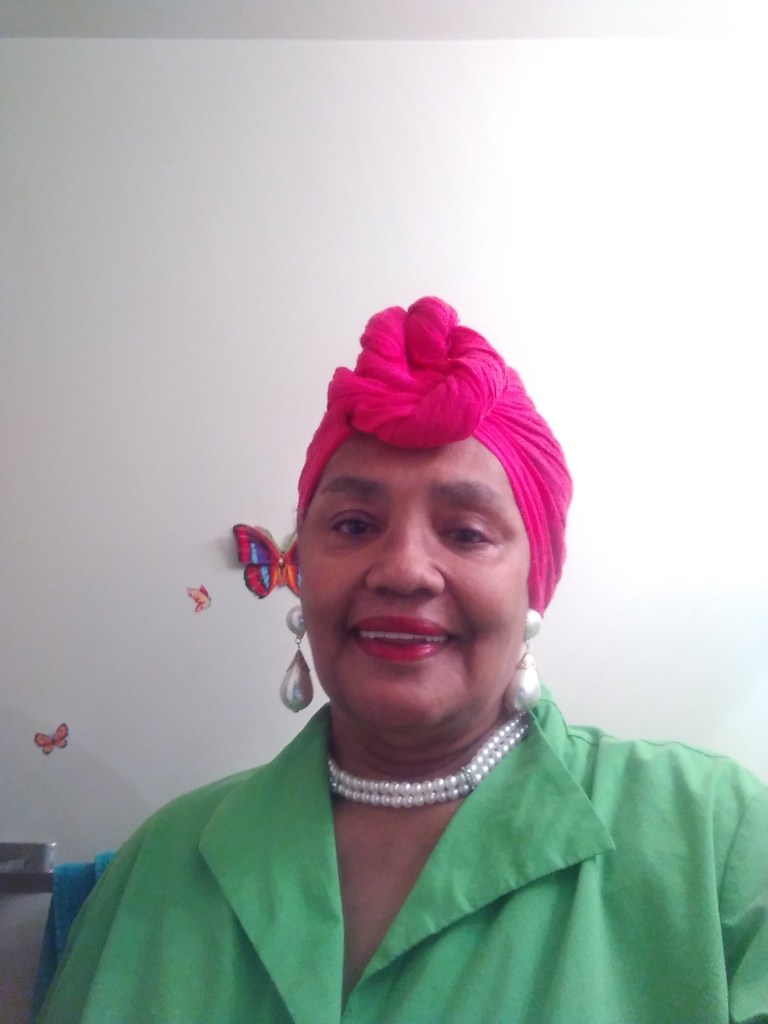
The last poet in my poetry spotlight is Carlene Gist or “T.C.” Not to make Carlene self-conscious, but she is the oldest poet I interviewed in this series and has a broad range of experience. Named after her father, Carlene is the first born of seven children and was born and raised in Detroit, Michigan.

In her own words, this poet says, “Poetry is a genre of writing that I’ve always admired. While in the first grade, I committed to memory and recited “The Night Before Christmas”, for the Christmas play. I’ve been writing but mostly reading poetry since then. Acting, singing and dancing are a few of my favorite things. I went from beating on tabletops to beating on the djembe, which is something I do to center myself. I hope one day to be a published poet.”


You have witnessed several historical events throughout your years as both a person and a poet. Do you find that current events shape your writing, and if so, how? What kind of events propel you to write poetry?

Being born in the late ’40s, I’ve seen a lot. Current events most definitely influence my sentiments when expressing myself through the written word. Poetry, to me, is one way of expressing one’s feelings and perspectives. I can find poetry in almost anything if I but just be still and observe. I find myself stirred by events that display man’s inhumanity to man on any level.

How has your writing changed over the years?

I used to write only poems that rhymed and a lot of love poems. I now write in free verse and about a variety of subjects. I also like writing haiku.

What influence does being a spoken-word poet play on the way you craft your poems?

I know that poetry, as all forms of art, is subjective. I do give effort in trying to find the most effective words and weave them in a manner that might help the audience receive the sentiment I am aiming to convey.

What poet, living or dead, would you like to meet and have dinner with? What would you serve your special guest?

Edgar A. Poe; Kahlil Gibran; Henry W. Longfellow; Paul L. Dunbar; Langston Hughes; Maya Angelou, to name a few. I would have said my peer, Nikki Giovanni. After hearing Amanda Gorman recite her poem “The Hill We Climb”, I would love to sit, chat, and break bread with her. I’m interested in what the younger generation has to say. I believe pizza might work.

What are your favorite aspects of your own poetry?

I like the way I’ve been able to provoke one to think about what I’m trying to convey.

When do you usually write your poetry?

Usually at the midnight hours-between midnight and three a.m.

What do you do when you experience writer’s block?

It’s really tough for me to start a flow when I’m experiencing writer’s block. Prompts, music, or just write what flows through me and edit later.

It

Written before the new time of 9 min. and 29 sec.

“It” looks into the camera. I watch
Knee on neck, hands tucked comfortably in pockets
Some might say cavalier, I say eviler
A cold and icy stare.
My eyes feel frostbitten, they hurt. I sense danger.
Like an ostrich who buries their eggs in the sand
Like an ostrich who senses danger and can’t run.
I bury my head in my hands. I feel not better but safer
Can I fear what I can’t see?
Under the covers a child will hide for fear of the boogeyman
Two minutes pass,  spread my fingers and peek.
My heart races,  as pressure rises. “It” is still there,  knee on neck
hands comfortably in pockets.  Under my covers I retreat.
Bury my head in my hands a little longer this time.
Hoping this time “it” will surely be gone.  Three more minutes pass
and “it’s” not gone yet.  Still there, icy stare, knee on neck,  hands tucked comfortably in pockets.  Hugging my pillow tight, I start sweating and crying.
A fearful child becomes so scared it will call for their mother.
They trust and believe Mother,  the person who witnessed them take their first breath is able,  and will save them from taking their last if she can.
Sounds of voices unfamiliar to me, I decide to  peek and see.
I’m petrified I can’t breath, “it” won’t leave.  Why must “it” torture me so long?
Three minutes seems like three hours I’ve waited for “it” to cease.
Eight minutes now, seems like eight days of holding my breath , suffocating under my covers.
They say fear leads to hate and hate to destruction
Forty-six seconds later  “it” is still there but George Floyd is not.
Mother came to get him.
I slowly lift my head out of my hands and start to breathe again.
-Carlene Gist

Isabelle Palerma

Poet Spotlight on: FH Denny

My poet today is FH Denny. For the month of April, I have found a diverse group of poets willing to bare their souls to me and share both their poetry and answer my questions. Global Poetry Writing Month is a great time to learn about poets across the world, and the people I have chosen to interview are a diverse group with a wide variety of identities, ages, and cultural backgrounds.

Poet and fiction author FH Denny was born in the U.K. but now lives in New Zealand. He/they write fantasy novels as well as poetry and are a passionate reader, stating his/their favorite book as the novel Watership Down.


In my poetry, I often find a common theme, but your poems seem to run the gamut of different themes. What inspires your writing?

If I were writing a book of poetry, I would try to stick to a theme, but the poems I share on my website are inspired by how I feel at the time. I’m using that space to experiment with different topics and finding new ways to express myself.

What kind of rituals do you have when writing poetry?

I’m not sure I have rituals. I am fairly spontaneous when it comes to poetry. I go through short periods of poetry-inspo where I write whatever comes into my head. Then I go for months without writing a single poem, not even a haiku.

Is there a particular time of day or place you like to write?

I write most of my poetry in my room on my computer. My desk is placed in front of a large window that overlooks the garden and fields that slope down to a small brook fringed with willows and lilies. We rent the fields to a neighbour who keeps the cutest miniature horses. Sometimes you can see the black rabbits that have made a home here and families of pukeko, New Zealand’s raptor-like swamphen. I write best in the mornings. My brain is sharpest then.

When did you first begin writing poetry?

I’ve been writing poetry since I was little. However, those poems consisted of made-up words, a shortcut to ensuring my sentences rhymed. Think of it as a poorly crafted Lewis Caroll attempt.

What transforms a poem from “good” to “spectacular” in your eyes?

The best poems are noticeably authentic. They’re not pretentious, nor do they try too hard with their structure. Even where craft is lacking, true emotion and honest sentiment ensure a profound connection with the reader.

Who are some of your favorite poets?

Emily Dickinson, W.H Auden, Sylvia Plath.

Which areas do you think you excel in? Which areas do you think you need improvement
in?

I do not think I excel at all when it comes to poetry. I am definitely still a rookie. Therefore, I feel I could improve in every area. If I had to pick a specific weakness it would be a tendency to repeat myself. I like to say things more than once. Even in everyday speech, I have form for echoing what I’ve just said.

What is your favorite part about writing poetry?

It’s a way to put into words your inner fears, desires and hurts. As opposed to prose, you don’t have to worry about context, you can get straight to the heart of the matter. It’s probably one of the most therapeutic forms of writing.

Do you have a favorite word? If so, what is it?

Equivocal. One of my editors uses it a lot. I find the sound rather humorous. It’s such a pompous sounding word, yet it has a pixie-like ring to it.

Where can readers find more of your writing?

www.francesdenny.com


Condolences

I don’t think you are in – Heaven – you are much too earthy for – Heaven.
I don’t think you are in – Hell – you are much too good for – Hell.
I don’t think you are a – spirit – you were not the spiritual type.
Although mum told me of fairy blood in you – as runs through the veins of the Manx.
Then you must be in your grave, but I don’t know where that is – we could not visit your funeral- See – but you can’t see for your eyes are closed, as is the custom of the dead. 

Then you must be sleeping – somewhere where it’s green – or in a chocolate shop – maybe? Where would you have liked to lie – if lying you have been?
Pity – I wouldn’t know; I didn’t know you well. 

Had I been far, far, away over the seven seas – maybe – but I fear you’d have more to lose.
I asked mum one day what you feared the most – she told me losing your mind.
I’ll tell you one thing, Grandma, God did not create this world, but perhaps it was Murphy’s law – I may have known you better, but you may have known me worse.
The more marbles you have cluttering your mind, the more marbles you’d likely lose.
A pity how the mind contradicts the heart – as your heart gets bigger, your mind gets smaller. You had friends in many places, from Nigeria to the Isle of Man and from New Zealand to the Isle of Crete.
Grandma, the world is unkind when it steals a nurse’s mind. 

It is why you’re not Murphy’s nature – spirit, or a Heavenly – creature
But instead a valued memory – that touched those who mattered.
Grandma, those memories you lost weren’t really lost. They were just passing through – from your mind to your friend’s minds – to your family and kin.
I may not have known you that much then but I can picture you now.
Grandma – I know where you are now – you must be in our minds.

– FH Denny

Isabelle Palerma

Global Poetry Writing Month

April is Global Poetry Writing Month, and as a poet, I thought it’d be fun to start my blog by interviewing some of the interesting poets I have met over the years.

There are so many great word artists out there who haven’t been discovered yet, and I’m hoping to use this space to share their thoughts, ideas, and poems with you.

This month, I will be featuring:

  • FH Denny
  • Dlvan Zirak
  • Brandan T.C. McCarty
  • LowKey
  • Carlene Gist

I hope you enjoy these poets as much as I do!

Isabelle Palerma