Poet Spotlight on: V.N.

Rarely do I get the opportunity to read poetry that sparks my soul as much as We Were Never Fireproof did. I had the pleasure of discovering V.N.’s poetry on the social media site Threads, and she is a phenomenal poet.

I often shy away from topics such as politics or current events, but V.N. tackles these hard-hitting topics with so much talent. Usually, I take my time and read poetry slowly, but I devoured We Were Never Fireproof in one sitting, reading through it hurriedly because I could hardly get enough of it.
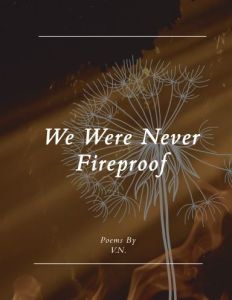
Her poetry is an unflinching look at the world around us, whether it’s the male gaze, how women are exploited, the effects of politics and people in power, and more. V.N. is an extraordinary poet, and more people should read her book.

It exposed me to a world of free verse poetry that I, as both a writer and reader of poetry, needed to be exposed to.


How long have you been writing poetry?

I have been writing since I was a child. I first remember starting to write in 1st grade around age 6-7. I built a little fort underneath my bed and would spend hours there writing and re-writing short stories.

I started trying my hand at poetry later on around age 11. I never shared my poems with anyone, but writing has always been such a great outlet for all of the feelings I can’t name in the moment.

I deal with a lot of anxiety, and poetry has become a way to turn it into something that feels more useful than just allowing the thoughts and feelings to ruminate in my head.

What was the most meaningful poem for you to write in “We Were Never Fireproof” and why?

It is hard to choose, but I think “Metamorphosis” would have to be the most meaningful because struggling with a sense of true identity is something that has been front and center in my life in recent years.

I received a late ADHD diagnosis in my early 20’s and prior to that, I spent my entire childhood and early adulthood feeling as though there was something fundamentally wrong with me that I could not quite figure out. No matter what I did, I always felt like I was constantly getting it wrong and everything felt so much harder than it seemed to be for the other people around me.

I also spent most of that time people-pleasing to an extreme degree and just trying to find a way to fit in and avoid criticism.I developed really rigid coping mechanisms and dealt with extreme anxiety.

Those struggles among other things have led to a disconnect in terms of identity, which I am now trying to piece back together. “Metamorphosis” was my way of putting all of that to paper in a way that felt safe.

For the reader who hasn’t gotten the opportunity to read it, can you talk a bit about your poetry book? What inspired it? What are the general overarching themes? Was it difficult to write about such topics, considering your subject matter?

“We Were Never Fireproof” is a collection of poetry I have written over the past three years. Each poem has a different origin point; some past, some present, some were written as pieces for art therapy projects, but all of them stem from a need to put all of my jumbled emotions down somewhere.

At the start, they were just a random collection of poems, but current events, specifically the election night in Nov. 2024, inspired me to weave them together into something tangible I could hold. The general overarching themes revolve around social commentary, feminism, our current political climate in the US, and survival under systemic corruption.

I know I cannot be the only person holding all of these heavy, anxious, outraged etc. feelings in my body, so I hoped that maybe sharing my book would help another person out there feel seen in the mess of it. It is not difficult to write about the topics, but it is difficult to share. I was afraid to put it out there at first as it is hard to know what is and is not safe, but staying silent does not make anything safer for anyone.

What’s your advice to aspiring poets looking to do more with their writing?

My biggest piece of advice, which is also advice to myself, is share it. Even if you’re scared. Even if you don’t think anyone is going to read it. Even if you think people will hate it. Just share it, put it out there, because you never know who might need to read exactly what you have to offer, and even if it is not for everyone, it’s going to be for someone out there.

As a poetry writer, do you also read poetry? Which poets are your favorites, and does reading poetry affect your writing?

Yes! I love poetry and prose. When I was a kid I loved Shel Silverstien. I even did a spoken word performance of one of his pieces in elementary school.

I also really enjoy Rupi Kaur and Amanda Lovelace.

What I really love though, is reading the poems of strangers on social media. It has become one of my favorite things to see people put their work out there and share it.

It definitely gives me inspiration to write and seeing the ways others use and interpret poetry is always fascinating.

A poem can mean one thing to the writer, and mean something completely different to the reader, and that has always been something I appreciate about poetry.

Each word carries its own weight depending on who is reading it and through what lens.

And I think that art is one of the best ways to cope with difficult things. Right now especially, art can be a form of coping, soothing, truth telling, and resistance and I love that so many people are willing to share their voices through this medium.

We need it.

Where can readers find “We Were Never Fireproof”?

My book is currently available on the Lulu online bookstore – here – or I occasionally share writing on my Threads page: here.


Metamorphosis

Rude
Talking out of turn
Nosey
Loud
Attention-seeking

A little girl calculating words thrown her way
Using them to mold herself
Into the shape of acceptance and belonging
Hoping it will be enough
Mimicking the way others exist in the world
Hoping to find the correct way to be

You read too much
Too quiet
Too shy
Weird
Standoffish
Awkward

A teenage girl calculating words thrown her way, trying to reshape
Remold
With every disapproving glance and comment
Chisels and hammers
A constant metamorphosis
An ever evolving dance
Hoping to be loved, even if for the conformity
But still not enough

Too much
Too little
Too big
Too small
Too loud
Too quiet
Too smart
Too spacey
Too kind
Too cold
Too much too much too much
But never enough

Mold
Change
Evolve
Try to squeeze into the boxes
Take the right shape
Maybe from this angle
Under the perfect lighting
With careful curation
Maybe in this form —
Maybe

Who am I now?
What do I love?
What do I care about?
Is this even me?
Or just a lifetime of collecting harsh words
Assigning weight to their meaning
Calculating my worth by their utterance
Trying to check all the boxes
And contorting to avoid their sting

The mask I wear: the price of admission

A woman, unsure
Identity unknown
Too many boxes, never the right shape
Nothing of her own, to tell her who she is
The world already told her
Time and time again,
Yet still, never enough.

– V.N.

Isabelle Palerma

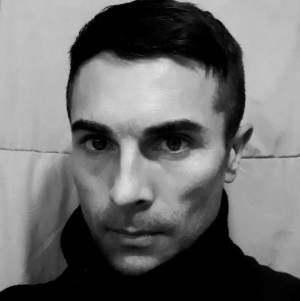
Poet Spotlight On: Alfred Gremsly

Alfred just recently shared with me a reader review which I feel entitled to share a part of with you all before including his interview. A reader of Alfred’s poetry had said the following:

The candor of this review honestly speaks volumes about Alfred Gremsly’s poetry, and while I am just starting to familiarize myself with his poetry, I can tell he has the same intentions I do with my writing and my day job – to provide a voice to communities normally stigmatized.

Alfred Gremsly is an American born poet who writes about mental health and the struggle that comes with it. A lifelong sufferer of anxiety, depression, and other mental illnesses, Alfred began writing poetry at the young age of twelve as a means of escaping his own mind.


Whose poetry style is most like your own?

I don’t know if anyone’s poetry is like mine.
I don’t read a lot of poetry, and if I do read, it’s going to be something that’s complete opposite of what I write.

Have you received formal training for writing? If so, what’s your background? If not, what got you interested in poetry writing?

I started writing around age 12; I was a very depressed kid. We lived in the country and had nothing to do, and so, I would make homemade books for myself of my thoughts and feelings.

Who are some of your favorite poets?

Some individual poets I like to read are Jan Serene, Ashley Jane, Angie Waters, Margie Watts, and Sarah Kay Collie.

How do you feel when you’re writing a poem? Is it cathartic or do you find it draining? What types of emotions do you experience when writing poetry?


As I, myself, am a lifetime sufferer of depression and anxiety, I have extreme highs and lows. Unfortunately, it takes being in those extreme lows in order for me to get out what I’m needing to say.


I sometimes feel as if writing is a curse of sorts –
so horrible would be the feelings and emotions I’m under while writing.

A lot of my poetry features fractured versions of myself as a narrative voice. What subjects do you write about and how are they influenced by your own experiences?


I write about what I’ve been through in life’s journey – my struggles with mental illness, the feelings of being mentally ill. I have overcome a lot through in life through poetry. I now have a grasp on my depression and anxieties, and I’m now on a mission to help others suffering from mental illnesses.

Where can readers find more of your poetry?

https://instagram.com/poetalfredgremsly

http://www.alfredgremsley.com

https://a.co/d/5B8OkmR


I’ll Be Dead before I’m Better

Am I just pretending
there are voices in my head?
And can anyone else hear
a single thing they’ve said?
Am I really talking to someone
who has been talking back to me?
Or have I just become
a psychotic mystery?
Life’s no fun pretending
when you need a friend
and a therapist is not the answer
when you want the words to end.
Can anyone hear the voices
that are screaming from my head?
I’ll be dead before I’m better
if I’m not already dead

Alfred Gremsly

Isabelle Palerma

Poet Spotlight On: ML Stevens

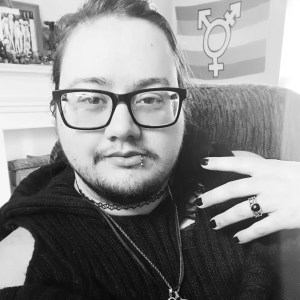
This weekend, I’m interviewing author and poet ML Stevens. She is extremely talented and kind. When I told her it was my birthday, she gave me an autographed copy of her poetry book “Caged Heart”.

When she’s not writing, or listening to the characters that live in her head rent free, ML Stevens can be caught with her nose in a book or running when the weather permits it. She wrote her first “novel” at a young age after looking out her window one summer day and deciding it would be cool to write a book. Since then she hasn’t been able to put the pen down. She has many more projects planned, including (hopefully) more poetry to come.


Why do you like writing poetry, and how is it different from writing fiction?

It’s where I go to when I need to get something out then and there without writing a novel. Often times, it’s where I go when I’m upset about something that has been weighing on me. Secondly, it flows easily. It’s never hard for me to know what to write into a poem.

Poetry for me is easier than writing fiction. I can whip out a poem anytime and anywhere while with fiction, I can come up with an idea like that, but it takes a lot more time and work to get it written on paper.

Where is your ideal writing space?

I have always felt weird about this question because I don’t have one ideal writing space. I enjoy writing in a coffee shop or at my desk just as much as I enjoy writing on my couch or even outside.

If you ever were to hold a poetry reading, where would you hold one?

I never have held a poetry reading but would love to do one in a cozy library like the library rat I am.

What is your biggest inspiration?

I think for poetry my biggest inspiration is life. the ups and downs of it as well as the people who are part of it. Life itself is artwork, much like poetry, and and there’s so much that I draw from it when I’m writing a poem.

Specific scenarios of hate, anger, sadness, happiness, love, friendship – even nature and all it has to offer can be found in my poetry.

What’s your favorite thing about writing poetry? Your least favorite?

My favorite thing is how quick it is for me. It’s something I can turn to when I’m in a meeting and struggling to stay awake. It looks like I’m taking notes. It’s also there when I want to write something but I am not sure if I want to start a novel or a short story.

If I had to pick a least favorite part about writing poetry, for me personally, it would be how damn personal it comes out ninety percent of the time. It’s a little more difficult for me to write a poem that isn’t personal in at least some way.

When did you begin writing? How has your poetry evolved since then?

In general, I have been writing since I was eight. I didn’t writing poetry until I was twelve or thirteen. In fact, I had never even read a lot of poetry until my middle school Creative Writing teacher made an assignment for us to write thirty different types of poems. I enjoyed writing poetry after that.

My poetry then was simplistic and not as deeply personal as it is now. As I continued to write poetry, it became more complex for me and much more personal. Many of my poems are based on my own experiences and emotions.

What’s your favorite word? Least favorite?

I can’t say I have a favorite word, but I am fond of the words scintillating and surreptitiously. I really don’t know why. For my least favorite words, I have a few that make me cringe. Gyrating is one of them.

Where can readers find more of your writing?

https://twitter.com/MLStevens13

https://www.instagram.com/mlstevens13

https://tinyurl.com/yc53y8rp


All Was Lost

Something long gone
That can’t be recovered
A broken world
Filled with greed
A shattered soul
The pieces scattered
A dreadful tempest
Roars inside
A tender heart
That barely beats
A soft voice whispers,

“I was here.”

– ML Stevens

Isabelle Palerma

Spooky Sunday: Interview with Shane Blackheart

Shane is a disabled non-binary trans author and artist from Ohio. They live with their two cats, and they spend way too much time exploring liminal space voids. They started writing stories at the age of seven and haven’t stopped since.

Having grown up with depression and a panic disorder, writing was often the best way to cope with early symptoms of trauma and agoraphobia. Later having been diagnosed with several mental health conditions, they made it their goal to raise awareness for these diagnoses, as they are often misunderstood.


What is your absolute least favorite horror novel cliché?

“Satanists are evil/violent/the villains of the story.” I can’t stand that because not only is it over-used, it’s punching down to a group of people who aren’t evil to begin with. It’s a tired trope from the Satanic Panic era that we should just all leave behind. I tend to DNF [Do Not Finish] a book when I see it.

If you were locked in a room with your biggest fear, what would you be staring down?

I’d be staring at a big black void because my biggest fear is not knowing, or the unknown and what lurks in it. Death would probably be standing there somewhere.

Where’s the creepiest place you’ve ever been?

Equally creepy and cool, years ago I went to the Mansfield Reformatory in Ohio, which is where they filmed the Shawshank Redemption. They aren’t joking when they say that place is haunted. I stepped into a cell to start taking photos of the second floor rooms, and two brand new sets of batteries drained instantly. On the bottom floor heading toward solitary confinement, my mom and I were the only ones in the room and I kept hearing shuffling footsteps behind me. I got the feeling I was being followed. When I turned around to see if another family was behind us, there was nothing there. I really want to go back to have more experiences.

What do you think it says about people that we like to be scared?

I’m not sure generally, but as someone with an anxiety disorder, it’s a safe way to be scared that I have control over. It’s probably similar to why people like going on roller coasters. When it’s safe it becomes fun, and it makes you feel alive in a way.

Why do you write horror?

To cope with my nightmare disorder. I’ve had chronic nightmares, night terrors, and occasional sleep paralysis episodes since I was an infant, according to my mom, and I’ve carried it into adulthood. I became used to it for the most part, but you never get used to the terrors that stick with you. I have very vivid, sometimes lucid, nightmares that have a definite message or a full or partial coherent narrative. In order to gain control over them and give them a purpose, I turn them into short stories and include some in my longer books. I also just love horror and it’s basically a lifestyle because it’s so close to home.

If you could build a Frankenstein’s monster – a Shane Blackheart monster, I guess – what celebrities would you steal body parts from to make the ultimate creature?

This is a really hard but super cool question. I’d say Johnny Depp’s head, Vincent Price’s brain, and for the rest, I’m not really sure but someone who has a bunch of tattoos because it would make a pretty sweet looking monster, plus it’s just my whole aesthetic at this point. I wish I could be covered in tattoos, if money ever permits.

What would you say is your greatest strength in your writing?

I’ve been told it’s two things: my natural and realistic flow of dialogue between characters, and my unconventional and weird way of storytelling. I don’t really stick to any formulas, and while I understand the writing rules, I set them aside for the most part because I don’t like to hinder my creativity or the honesty of the story I’m writing. My editor says it works well with what I do, so I’ll stick with it.

Share a photo or art of a character inspiration.

I’m an artist myself, and I often draw my own stuff. I can share some art I did of a main character in my current WIP.

When you write an emotionally draining scene, how do you prepare? How do you repair yourself afterwards?

The best way to explain is to bring up a scene I chose to intentionally trigger myself for to write authentically. I put on headphones and turned up a dark ambient album that reminded me of my worst days, and I let the dread just sort of take over as I let the words flow. It was an emotional and intense scene because it had to do with overcoming my worst fears related to trauma, and it drained me big time.

Afterward, I surrounded myself with comfort stuff, like my favorite music, foods, and shows. I gave myself the time to come down from it for a few days. I didn’t really prepare because I’m impatient and just like to get it over with, so the recovery afterward is just as important.

What famous author, living or dead, would you want to be your mentor? Why?

There are a few, but I have to say Anne Rice. Her books were everything to me as a teenager, and growing up, I read more and more of her work. I just admire her mind and how it works, and I feel like I could learn so much from her. She has a lot of advice and videos still up about writing because she loved to help other writers, and one of her messages always kept me going when I felt down about myself and my talents.

She always said that if a story had a burning need to be told, and you really loved it and wanted to tell it, then it deserves to be told and it’s important to get it out there.

How do you feel about banned books? What would be your response if one of your books was banned?

If one of my books was banned, I’d know I did something right. I go out of my way to read wrongfully banned books from the past, and I will continue to do so now. Book banning is dangerous, and it concerns me with what’s happening right now in America. If we’ve learned anything, it’s the books they don’t want you to read that you should be reading the most.

Would you rather be in a room full of snakes or a room full of spiders?

My arachnophobia is so bad, I’d have to say snakes. Hopefully they’ve been fed beforehand.

Share a link to a favorite song or playlist you always listen to when writing.

I make playlists specifically for everything I write, but while I’m writing I can’t have anything with lyrics. My favorite dark ambient album to put on repeat is one that’s been perfect for writing psychological horror: Atrium Carceri and Cities Last Broadcast.

Would you be willing to share a scary scene (no spoilers!) for a book you’re working on now?

Sure! I’m not sure if it’s scary in the usual sense, but it is unsettling.


A dark doorway came into view, and I stepped past its threshold much sooner than I’d realized. Time did not exist there in any way that mattered.

The space grew dark as night washed over it, and a blood moon beamed through from an open balcony at the end of the room. Large open windows that stretched from floor to ceiling lined one of the walls, and red streaks of moonlight painted the floor in slatted patterns.

I approached the balcony and looked out over the expanse of the now red desert. The mountains were closer, but they weren’t stationary.

They began to writhe slowly as if they were exhausted. Human-shaped spirits the size of titans rose from the mountains and sunk back once more, and a distant wailing that grew louder became a droning chant. The titans were in agony, and more joined the desolate cries that surfaced from a Hell they could not escape. I turned to see my void partner backing me against the railing, and beside me stood my shadow man. Around us gathered the cloaked shadow figures in waiting for the intimate ritual to come, and hovering above, the giant eldritch eye reappeared to complete the gathering.


Where can readers find you?

Twitter: https://twitter.com/ShaneBlkheart

TikTok: https://www.tiktok.com/@shaneblackheart

Instagram: https://instagram.com/shaneblackheart

YouTube: https://youtube.com/c/ShaneLestan

Isabelle Palerma

Spooky Sunday: Interview with Donise Sheppard

Hey Stargazers, welcome to Spooky Sundays. Today, I chose to interview an author, editor, and publisher, Donise Sheppard. I have had a short story, Something Beyond, published by her publishing imprint, Pixie Forest Press. I am honored to get a chance to interview this woman I admire.

Donise Sheppard is a romance and horror writer residing in southern West Virginia with her husband and four children. Donise found her passion for books at an early age and has been chasing stories ever since. She is an author, editor, and co-owner of Pixie Forest Publishing. Love and romance are her first passions, but who can resist a scary story? When she isn’t working, she’s reading for pleasure, baking, or singing off key.


You are both a publisher and a writer. How have you found the two roles influence one another?

I decided I wanted to become a publisher because as a writer, I was seeing more and more unpaid anthologies and it was frustrating. Writers work hard, dedicating hours upon hours for their art. They deserve some form of payment.

Also, I think being a writers makes me more objective when reading and choosing stories. I can set aside what I enjoy as a reader and look at the writing itself.

As a publisher, I choose themes for upcoming anthologies. These themes aren’t always something I’m familiar with writing, which puts me out of my element and makes me a stronger writer.

Your publishing imprint does fantastic anthologies. I was honored to be featured in “Phobia” last year. In honor of spooky season, what’s your biggest fear?

As a parent, my biggest fear is losing my children.

I’m afraid of most things, but my absolute biggest normal fear would be of rats and mice. I can’t even look at a picture of them or I start to panic.

Why do you write?

I’ve loved books and stories since I was six years old. I dreamed of being a publisher in New York and writing on the side. I write for myself as well as others. I am a very emotional person and writing helps me work through them. I also dream of inspiring someone, making them love literature as much as I do, or just giving them an escape from their own lives and emotions.


Are there any “little things that go bump in the night” that keep you awake? Worries, fears? If so, what are they?

I am a worrier. I worry about everything, almost nonstop. I’ve actively been trying to learn to let the little things go, but I’m a work in progress. I constantly worry about failing or finding new readers or just being good enough so I can show my children they don’t have to settle in a job they hate to survive.

I’m that mom who worries about the house burning down while we’re sleeping and I can’t get to my kids, or someone breaking in.

Banned books is a hot topic right now – and one that some authors fear. How would you feel if you received a notification that one (or several) of your anthologies had been banned? What would your response be?

Honestly, I’m not sure. I would definitely think it was a bit odd, but when I think back to some of the content of a few of the stories, mine included, I could understand why they would. I’m not a fan of banning books, though. If a child is reading, they should be allowed to read. It should be up to the parents to decide what is appropriate.

What does your typical day look like? How do you divide your time between writing, editing, and publishing?

Well, I’m not sure if you know this, but I’ve recently enrolled in college to get my bachelor’s degree, so my schedule looks a lot different this year than it did last year. I usually dedicate about two hours a day to my publishing company (right now I’m hunting for images for the Scars cover), and about two hours for my own work, whether editing or writing. Editing for clients takes precedent, right after schoolwork, and I usually spend three to six hours a day on that, depending on the length and deadline.

Where do you get most of your writing done?

I have three desks, but I usually sit at my kitchen table to work. I like the lighting in there better, and it’s closer to the coffee pot. 😉

In the summer, I love to write by the lake.

If you could have dinner with any person who has influenced your career, who would it be, why, and what would you be eating?

Honestly, my mom, grandma, and dad influenced my career the most. My mom and grandma were storytellers and always encouraged me. And my dad was my biggest supporter in everything I did.

If I chose a professional author who influenced my career, it would be RL Stine. He was my very first favorite writer and made me love spooky stories. I’m not sure what we’d eat. I’d just be happy having coffee with him and chatting about stories.

What projects are you currently working on?

I am currently editing a dystopian romance novel I wrote a couple of years ago, hoping to publish it in January. I’m also writing a romance novel with no set date for publication. I have four novels written and waiting for editing, so hopefully next year you’ll be seeing a lot of me.

Where can readers find you?

Personal Website: www.donisesheppard.com

Twitter: www.twitter.com/donisesheppard 

Instagram: www.instagram.com/donisesheppard

Facebook: www.facebook.com/authordonisesheppard 

Isabelle Palerma